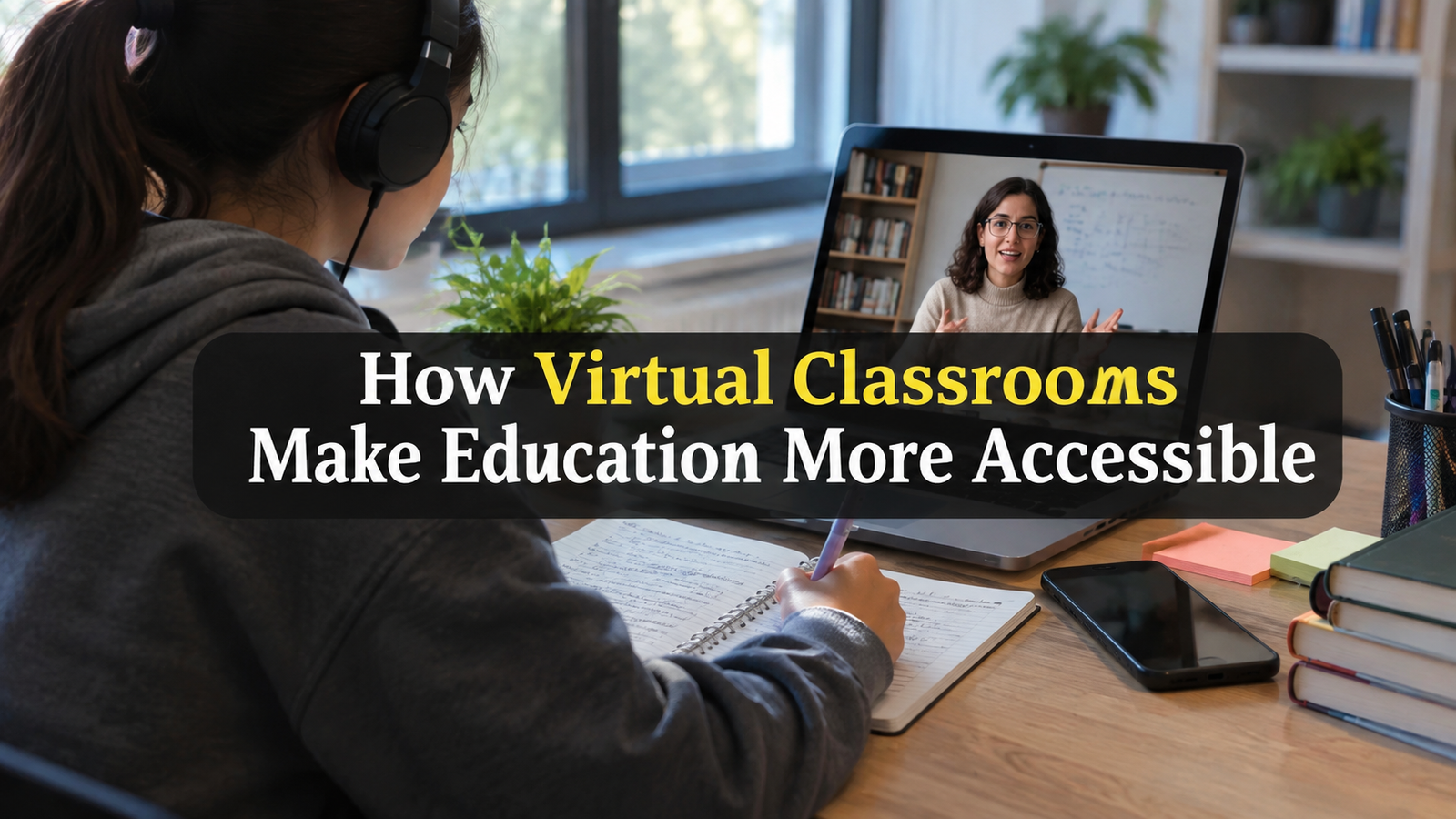
Education has always played an important role in personal growth, professional development, and social progress. For many years, traditional classrooms were considered the main place where students could learn from teachers, interact with classmates, and access educational resources. However, technology has changed the way people learn. Today, virtual classrooms are making education more accessible to students who may not always be able to attend a physical classroom.
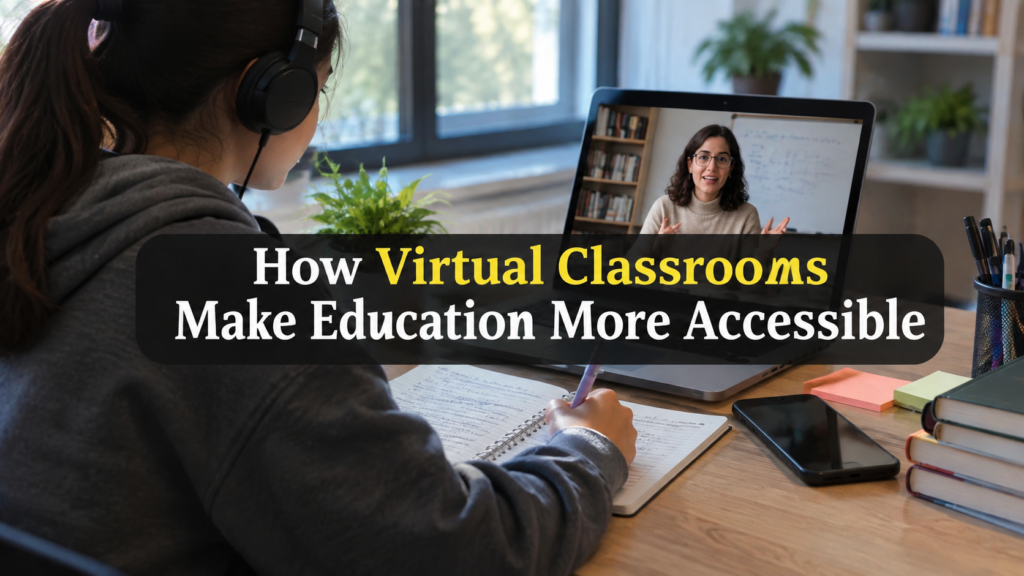
A virtual classroom is an online learning environment where teachers and students can communicate, share educational materials, attend lessons, complete assignments, and participate in discussions through the internet. It allows students to learn from almost anywhere, provided they have access to a suitable device and an internet connection.
Virtual classrooms have become an important part of modern education because they can remove many barriers that once made learning difficult. Distance, travel costs, physical limitations, work schedules, and limited local educational opportunities can all affect a person’s ability to study. Online learning can help reduce some of these challenges and provide more flexible access to education.
What Is a Virtual Classroom?
A virtual classroom is a digital space designed to support teaching and learning over the internet. It often includes live video lessons, recorded lectures, discussion areas, digital assignments, presentations, quizzes, and shared learning materials.
Teachers may use virtual classrooms to explain topics in real time or provide lessons that students can study later. Students can ask questions, submit assignments, work with classmates, and receive feedback without being physically present in the same building.
Different virtual classrooms may use different tools, but the main goal is usually the same. They try to recreate important parts of the classroom experience in an online environment.
For example, a teacher may present slides during a live lesson while students listen and ask questions through audio, video, or chat. The teacher may then upload reading material and assign a short activity. Students can complete the work and submit it online.
This combination of communication, learning materials, and digital activities makes virtual classrooms useful for schools, colleges, universities, training programs, and professional education.
Virtual Classrooms Reduce Geographical Barriers
One of the biggest benefits of virtual classrooms is that they can reduce the importance of physical distance.
In a traditional education system, students usually need to live near a school, college, university, or training center. People living in remote areas may have fewer educational choices because suitable institutions may be located far away.
Virtual classrooms can change this situation.
A student living in a small town may be able to attend an online course offered by a university in another city. A professional may join a training program offered by an organization in another country. A school student may receive specialized instruction that is not available locally.
This does not mean that location no longer matters at all. Internet access, time zones, language, and technology can still create challenges. However, virtual classrooms can significantly increase the number of learning opportunities available to students outside major educational centers.
Students Can Learn From Home
Travel can create a major barrier to education.
Students may need to spend time and money traveling to school or college every day. In some areas, transportation may be expensive, unreliable, or unavailable. Long travel times can also reduce the amount of time students have for studying, family responsibilities, or rest.
Virtual classrooms allow many students to study from home.
This can be especially useful for students who live far from educational institutions. It can also help people who cannot travel easily because of family responsibilities, work commitments, or personal circumstances.
Learning from home may also reduce some daily expenses related to transportation, meals, or accommodation.
However, studying from home also requires self discipline. Students need to manage distractions, create a suitable study environment, and follow a regular learning schedule.
When these habits are developed, home based learning can become a practical and convenient option.
Virtual Classrooms Offer Flexible Learning
Flexibility is one of the main reasons virtual classrooms can make education more accessible.
Traditional classes are usually held at fixed times. Students who cannot attend at those times may miss important lessons. This can be difficult for working adults, parents, caregivers, and students with other responsibilities.
Many virtual classrooms provide both live and recorded learning options.
Live lessons allow students to interact with teachers and classmates at a scheduled time. Recorded lessons allow students to study later when it is more convenient.
This flexible approach can help students organize education around their daily responsibilities.
For example, a working student may watch recorded lectures in the evening. A parent may complete assignments when children are at school or asleep. A student who misses a lesson because of an emergency may review the recording later.
Flexibility does not mean that students can ignore schedules completely. Most courses still include deadlines and expectations. However, virtual classrooms often provide more control over when and where learning takes place.
More Courses Can Become Available
Students attending physical institutions are often limited to the courses offered in their local area.
A college may not offer a particular subject. A school may not have a specialist teacher. A training center may only provide a small number of programs.
Virtual classrooms can increase access to a wider range of subjects.
Students may be able to study languages, technology, business, science, design, mathematics, professional skills, and many other areas through online courses.
This can be particularly valuable for students interested in specialized subjects.
For example, a student may want to learn a programming language that is not taught at a nearby college. Through a virtual classroom, the student may be able to join a course offered by another institution.
A wider choice of subjects allows students to explore their interests and develop skills that may be useful in future education or employment.
Virtual Classrooms Can Support Students With Mobility Challenges
Physical access can sometimes make traditional education difficult for students with disabilities or mobility limitations.
Buildings may have stairs, narrow spaces, transportation barriers, or other accessibility problems. Even when schools are designed to be accessible, traveling to and from the institution may still be difficult for some students.
Virtual classrooms can provide another way to access education.
Students can attend lessons from a location that already meets their personal needs. They may also use assistive technologies such as screen readers, speech recognition software, enlarged text, captions, or keyboard navigation.
Digital learning does not automatically guarantee accessibility. Online platforms must still be designed carefully. Videos should include captions where possible, documents should be readable by assistive software, and websites should use clear navigation.
When virtual classrooms follow good accessibility practices, they can provide important learning opportunities for students with different needs.
Recorded Lessons Give Students More Control
In a physical classroom, a lesson usually happens once. Students who do not understand part of the explanation may need to ask the teacher again or rely on notes.
Recorded virtual lessons can give students more control over the learning process.
A student can pause a video, replay a difficult section, slow down the lesson, or review the entire topic later.
This can be useful when studying difficult subjects.
For example, a student learning mathematics may replay the steps used to solve a problem. A language learner may listen to pronunciation several times. A science student may review an explanation before completing an assignment.
This ability to repeat lessons can support different learning speeds.
Some students understand new information quickly, while others need more time. Virtual classrooms can allow students to review material according to their own learning needs.
Digital Materials Can Be Easier to Access
Virtual classrooms usually organize learning materials in digital form.
Students may receive electronic books, presentations, lesson notes, worksheets, videos, links, and practice exercises through an online learning platform.
This can make resources easier to store and access.
Instead of carrying several books and notebooks, students may be able to keep most materials on a computer, tablet, or smartphone.
Digital materials can also be updated more easily. Teachers may correct information, upload additional examples, or provide new learning resources without printing new documents.
Search tools can also help students find specific information inside digital documents.
However, students should still develop good organization habits. Creating folders, naming files clearly, and keeping backups can make digital learning more effective.
Virtual Classrooms Can Help Working Adults Continue Education
Many adults want to continue their education but cannot stop working to attend full time classes.
Traditional schedules can make this difficult.
Virtual classrooms can provide a more practical option because students may be able to study outside normal working hours.
An employee may take an online professional course after work. Someone changing careers may complete a certificate program from home. A business owner may attend virtual training without closing the business for several days.
This makes lifelong learning more realistic.
Modern workplaces change quickly, and employees often need to learn new technologies and skills. Virtual classrooms can help people continue learning throughout their careers without completely changing their daily routines.
Online Learning Can Reduce Some Educational Costs
Education can involve many expenses beyond tuition fees.
Students may need to pay for transportation, accommodation, printed materials, meals, or relocation.
Virtual classrooms may reduce some of these costs.
A student who studies from home may not need to move to another city. Transportation expenses may also be lower. Digital materials can sometimes reduce the need for printed books and notes.
However, virtual education is not always cheaper.
Students may need a computer, smartphone, internet connection, software, or other equipment. Some online degree programs can also have significant tuition fees.
Therefore, cost advantages depend on the course, institution, location, and technology requirements.
Still, for many learners, virtual classrooms can remove some important expenses connected with traditional attendance.
Students Can Connect With People From Different Places
Virtual classrooms can bring together students from different cities, regions, and sometimes different countries.
This can create a more diverse learning environment.
Students may hear different opinions, experiences, and ways of thinking during discussions. They may also learn how people from different backgrounds approach the same problem.
This kind of interaction can be valuable in subjects such as business, social sciences, languages, technology, and international studies.
Group projects can also help students learn how to communicate and cooperate online.
These skills are becoming increasingly useful because many workplaces now use digital communication tools for meetings, teamwork, and project management.
Virtual Classrooms Can Support Personalized Learning
Every student learns differently.
Some students prefer reading. Others learn better through videos, diagrams, discussion, or practical activities.
Virtual classrooms can provide several types of learning materials in one place.
A teacher may provide a video explanation, written notes, a quiz, a discussion activity, and additional reading about the same topic.
Students can use the resources that help them understand the lesson most effectively.
Teachers may also use digital learning systems to monitor student progress. If a student is struggling with a topic, additional practice or resources may be provided.
Personalized learning is not always easy to create, especially in large classes. However, digital tools can make it easier for teachers to provide different learning options.
Communication Can Continue Outside Lesson Time
In traditional classrooms, communication may be limited to school hours.
Virtual classrooms often include communication tools that allow learning to continue after the lesson.
Students may send questions through discussion boards, classroom messages, or email. Teachers may post announcements, explanations, or feedback online.
Students may also help each other through group discussions.
This can create a learning environment where communication is not limited to a single classroom period.
At the same time, clear boundaries are important. Teachers and students should not feel that they must be available every hour of the day.
Good virtual classrooms usually provide clear expectations about communication and response times.
Virtual Classrooms Can Help During Disruptions
Unexpected events can interrupt traditional education.
Bad weather, transportation problems, natural disasters, health emergencies, or temporary building closures may prevent students from attending classes.
Virtual classrooms can help education continue during some of these situations.
Teachers may move lessons online, share assignments digitally, and communicate with students from different locations.
This ability can make education systems more flexible and resilient.
It does not mean that virtual learning can solve every problem. Some students may lose electricity, internet access, or suitable study space during emergencies. However, having an online learning system already available can provide an important alternative when physical classrooms cannot be used.
Technology Skills Can Improve Through Virtual Learning
Using virtual classrooms can also help students develop digital skills.
Students may learn how to participate in video meetings, upload documents, use cloud storage, create digital presentations, communicate professionally online, and manage electronic files.
These skills can be useful in higher education and employment.
Many modern jobs require employees to use digital communication and collaboration tools. Students who regularly participate in virtual classrooms may become more comfortable with this type of technology.
However, teachers should not assume that every student already knows how to use digital tools.
Simple training and clear instructions can make virtual learning more accessible for beginners.
Challenges of Virtual Classrooms
Although virtual classrooms can improve access to education, they also have limitations.
One of the biggest challenges is the digital divide.
Not every student has reliable internet access, a suitable device, or a quiet place to study. Students with slow connections may struggle to attend live video lessons.
Technical problems can also interrupt learning.
Some students may find it harder to concentrate at home. Others may miss the social interaction of a physical classroom.
Teachers may also face challenges when trying to keep students engaged online.
These problems show that virtual classrooms should be designed carefully.
Providing recorded lessons, downloadable materials, simple platforms, technical support, and flexible participation options can help reduce some of these barriers.
The Importance of Digital Accessibility
If virtual classrooms are meant to make education more accessible, the technology itself must also be accessible.
Text should be easy to read. Videos should include captions when possible. Important information should not depend only on images. Websites should work with keyboards and screen reading software.
Teachers should also think about file formats.
A scanned image of a textbook page may be difficult for some students to use. A properly formatted digital document may be much more accessible.
Accessibility benefits many students, not only those with disabilities.
For example, captions can help students studying in a noisy environment. Clear headings can make long documents easier to understand. Recorded lessons can help students who need extra review.
Good accessibility design improves the learning experience for everyone.
The Role of Teachers in Virtual Classrooms
Technology alone cannot create successful education.
Teachers still play a central role.
They need to explain concepts clearly, organize lessons, answer questions, give feedback, encourage participation, and help students remain motivated.
In virtual classrooms, communication becomes especially important.
Students may feel disconnected if they only receive assignments without regular interaction. Live discussions, feedback, group activities, and teacher messages can help create a stronger sense of connection.
Teachers may also need to adjust their teaching methods.
Long lectures that work reasonably well in physical classrooms may be tiring online. Short explanations combined with activities, quizzes, discussions, and breaks can sometimes work better.
Effective virtual teaching combines technology with good teaching practices.
The Future of Accessible Education
Virtual classrooms are likely to remain an important part of education.
Many institutions are now combining physical and online learning.
Students may attend some lessons in person while completing other activities online. This approach can provide both personal interaction and digital flexibility.
Technology will also continue to improve.
Better video platforms, adaptive learning systems, artificial intelligence, digital collaboration tools, and interactive educational resources may make virtual learning more effective.
However, the main goal should not simply be to use more technology.
The goal should be to use technology in ways that improve access, understanding, participation, and learning quality.
When virtual classrooms are designed around student needs, they can provide opportunities that may not be possible through traditional education alone.
Conclusion
Virtual classrooms have changed the way education can be delivered. By reducing geographical barriers, supporting flexible schedules, providing digital learning materials, and allowing students to learn from home, they can make education more accessible to many people.
They can support students in remote areas, working adults, learners with mobility challenges, and people who want access to subjects that may not be available locally.
Virtual classrooms also give students more control over learning through recorded lessons, digital resources, and flexible study options.
At the same time, online education has important challenges. Reliable internet, suitable devices, accessible technology, teacher support, and good study habits are all necessary for effective virtual learning.
Virtual classrooms should therefore be viewed as a useful educational tool rather than a complete replacement for every form of traditional teaching.
When used carefully, they can expand educational opportunities and help more people participate in learning regardless of location, schedule, or personal circumstances.
As education continues to develop, virtual classrooms will likely play an important role in creating learning systems that are more flexible, inclusive, and accessible for students around the world.