Education has changed greatly as technology has become part of everyday learning. Students no longer depend only on printed books, physical classrooms, and handwritten assignments. Many schools, colleges, universities, training centers, and businesses now use digital platforms to organize teaching and learning. One of the most important tools behind this change is the Learning Management System.
A Learning Management System, often called an LMS, is a digital platform designed to organize, deliver, manage, and track learning activities. It allows teachers to share lessons, students to complete assignments, institutions to monitor progress, and organizations to provide training through one central system.
When I first started reading about Learning Management Systems, I realized that they are much more than websites where teachers upload notes. A well designed LMS can become the main digital learning environment for an entire school, university, or organization.
Understanding what Learning Management Systems are and how they work can help students, teachers, parents, and education professionals understand the direction in which modern education is moving.
What Is a Learning Management System?
A Learning Management System is software that helps manage educational courses and training programs.
The main purpose of an LMS is to bring learning materials, communication tools, assignments, assessments, and student progress into one organized platform.
For example, a teacher may create an online course inside an LMS. The teacher can upload reading materials, videos, presentations, quizzes, homework, and instructions. Students can sign in to the system, access the lessons, submit their work, and check their grades.
Instead of using many separate tools, everything can be managed from one place.
Learning Management Systems are commonly used in schools, universities, online education platforms, companies, government organizations, and professional training programs.
Some systems are designed mainly for academic education, while others focus more on employee training and professional development.
Why Learning Management Systems Have Become Important
The growth of digital education has made Learning Management Systems increasingly important.
In a traditional classroom, students usually receive information directly from the teacher during a fixed lesson time. Learning materials may be provided as printed notes, textbooks, or worksheets.
An LMS adds another layer to this learning process.
Students can access educational resources at different times and from different locations. Teachers can manage learning activities more efficiently. Institutions can also keep a record of course participation, grades, assignments, and student progress.
This flexibility became especially important as online learning and hybrid education became more common.
A Learning Management System can support classroom teaching, fully online education, or a combination of both.
How Does a Learning Management System Work?
The basic working process of a Learning Management System is quite simple.
First, an institution or teacher creates a course inside the platform. The course is then divided into sections, lessons, units, or modules.
Learning materials are added to each section.
These materials may include:
Videos
Reading content
PDF files
Presentations
Recorded lectures
Quizzes
Assignments
Discussion activities
Practice exercises
Students are then given accounts or login details.
After logging in, students can view the courses they are enrolled in. They can follow the lessons, complete tasks, participate in discussions, and submit assignments.
The LMS records many of these activities automatically.
Teachers can see which students have completed a lesson, submitted an assignment, taken a quiz, or finished a course.
This creates a structured digital learning process.
Course Creation in a Learning Management System
Course creation is one of the main functions of an LMS.
A teacher or course administrator usually starts by creating a new course and giving it a title.
The course can then be divided into topics or modules.
For example, a science course might contain modules such as:
Introduction to Science
Living Organisms
Human Body Systems
Matter and Energy
Earth and Environment
Each module may contain several lessons.
Teachers can upload explanations, diagrams, videos, practice activities, and assessment tasks.
A well organized course allows students to understand what they need to study and what they need to complete.
The LMS therefore acts as both a teaching platform and an organizational tool.
How Students Access Learning Materials
One of the biggest advantages of a Learning Management System is easy access to educational content.
Students usually log in using a username and password.
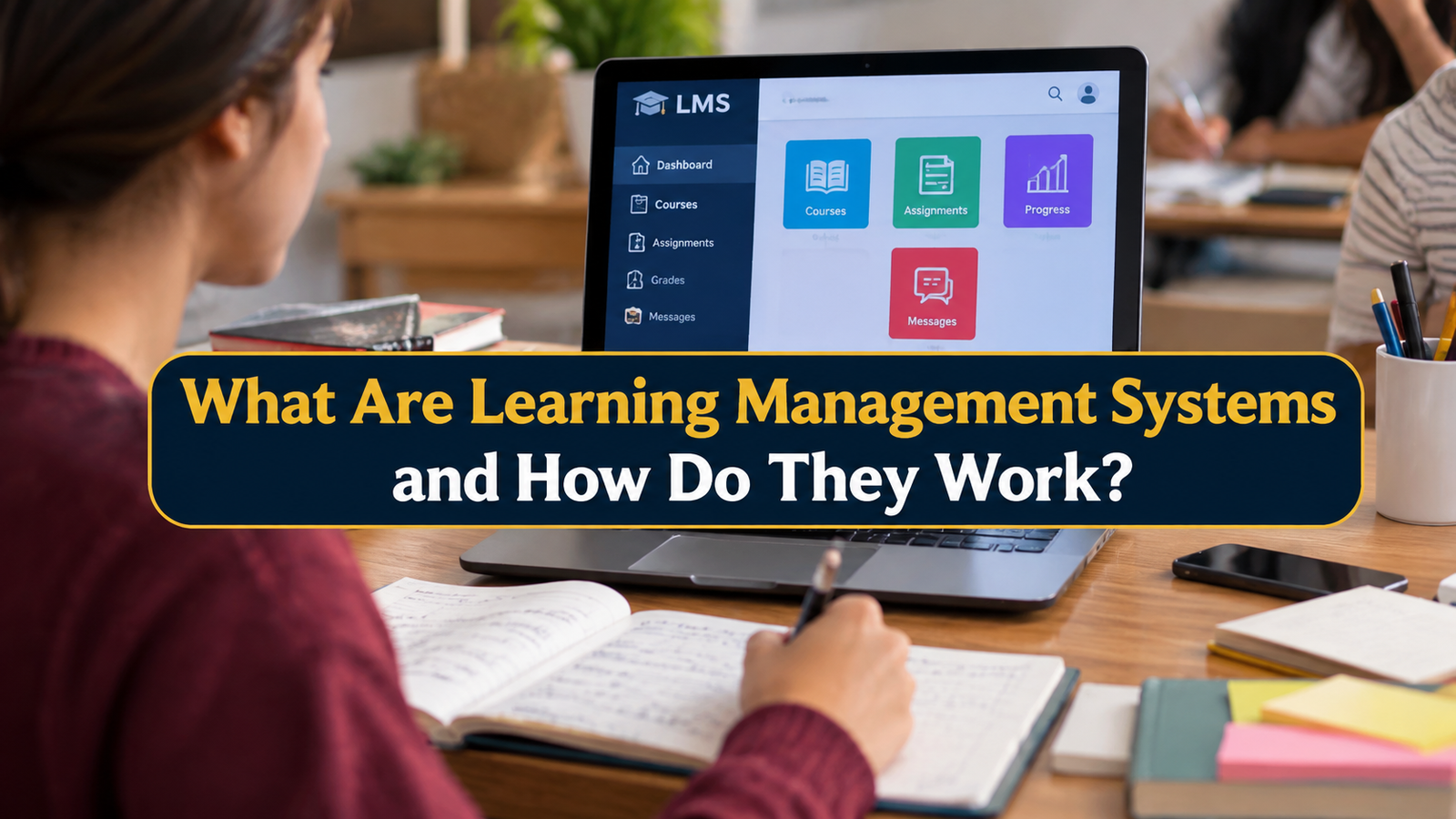
After entering the system, they can see a dashboard showing their courses and upcoming tasks.
They may be able to access learning materials through a computer, tablet, or smartphone.
This makes learning more flexible.
For example, a student who misses a classroom lesson may still be able to read the uploaded notes or watch the recorded lecture later.
Students can also review difficult topics more than once.
This ability to return to learning materials can support better understanding.
Assignments and Homework
Learning Management Systems also simplify the assignment process.
Teachers can create an assignment and set a submission date.
Students can read the instructions and upload their completed work directly through the LMS.
The system records the submission time automatically.
Teachers can then review the work, give marks, and provide comments.
Students can later log in and read the feedback.
This digital process reduces the need for printed papers and makes it easier to keep educational records organized.
It can also help teachers manage assignments from large numbers of students.
Quizzes and Online Assessments
Another important feature of Learning Management Systems is online assessment.
Teachers can create different types of questions, including multiple choice questions, true or false questions, short answers, matching questions, and longer written responses.
Some quizzes can be graded automatically.
For example, when a student completes a multiple choice quiz, the LMS can compare the answers with the correct answers saved by the teacher.
The student may receive the result immediately.
This can save teachers time and provide students with quick feedback.
More detailed assessments, such as essays or projects, may still require manual grading.
Tracking Student Progress
Progress tracking is one of the strongest features of a Learning Management System.
The system can record information about student activity.
Teachers may be able to see whether a student has opened a lesson, completed a quiz, submitted an assignment, or finished a module.
Some systems also show overall course completion.
This information can help teachers identify students who may need additional support.
For example, if a student has not completed several lessons, the teacher can contact the student and try to understand the problem.
Progress tracking can therefore support better communication and academic planning.
Communication Between Teachers and Students
Learning Management Systems often include communication tools.
Teachers may post announcements, reminders, updates, or course instructions.
Students may be able to send messages, ask questions, or participate in discussion forums.
These tools can improve communication, especially in online courses where students and teachers do not meet regularly in person.
Discussion boards can also encourage students to share ideas and learn from each other.
In this way, an LMS is not only a place for storing educational materials. It can also become a digital learning community.
The Role of the LMS Dashboard
Most Learning Management Systems include a dashboard.
The dashboard acts as the main screen for the user.
For students, the dashboard may show courses, assignments, grades, deadlines, and notifications.
For teachers, it may display student activity, submitted assignments, course information, and grading tools.
A clear dashboard can make the system easier to use.
Students can quickly understand what work needs to be completed, while teachers can manage their courses more efficiently.
Learning Management Systems in Schools
Schools can use Learning Management Systems in many different ways.
Teachers can upload homework, worksheets, lesson summaries, and revision materials.
Students can use the platform after school to review lessons and complete assignments.
Parents may also receive access to certain information, depending on the system being used.
An LMS can be especially helpful when students need to continue learning from home.
It also creates a central place where students can find educational resources instead of searching through different websites or messages.
Learning Management Systems in Universities
Universities are among the largest users of Learning Management Systems.
A university may have thousands of students and hundreds of courses.
Managing all of this information without a digital system can be difficult.
An LMS allows university departments to organize course materials, lecture recordings, assignments, examinations, and grades.
Students can access information related to all of their subjects through one account.
Professors can manage large classes more easily and communicate important updates.
This is one reason Learning Management Systems have become an important part of higher education.
Learning Management Systems in Businesses
Learning Management Systems are not limited to schools and universities.
Many businesses use them for employee training.
A company may create courses about workplace safety, customer service, company policies, technical skills, or professional development.
Employees can complete these courses through the company LMS.
Managers can then track who has completed the required training.
This can be useful when organizations need to train large groups of employees across different locations.
The same system can also be used for new employee orientation and skill development.
Advantages of Learning Management Systems
Learning Management Systems offer several important advantages.
One major benefit is organization.
Learning materials, assignments, assessments, grades, and communication can all be managed through the same platform.
Another benefit is flexibility.
Students can often access lessons when and where it is convenient for them.
Teachers can also update course materials without printing new documents.
An LMS may also save time by automating tasks such as quiz grading, notifications, progress tracking, and record keeping.
These features can make education more efficient for both teachers and learners.
Learning at Your Own Pace
Some Learning Management Systems support self paced learning.
In this type of learning, students are not always required to complete every lesson at exactly the same time.
A student may move through the course based on personal progress.
Students who understand a topic quickly may continue to the next lesson, while others may spend more time reviewing difficult material.
This flexibility can be useful in online courses and professional training programs.
However, good planning is still important. Students need motivation and time management skills to benefit from self paced learning.
Challenges of Learning Management Systems
Although Learning Management Systems offer many benefits, they also have challenges.
One common problem is internet access.
Students with slow or unreliable internet connections may have difficulty watching videos or downloading large files.
Another challenge is digital skills.
Teachers and students may need training before they feel comfortable using the platform.
Poorly designed courses can also create confusion.
If learning materials are not organized clearly, students may find it difficult to understand what they need to do.
Technology alone cannot create good education. Teachers still need to design meaningful lessons, provide guidance, and communicate with students.
Data Privacy and Security
Learning Management Systems store important information.
This may include student names, email addresses, grades, assignments, attendance records, and learning activity.
For this reason, institutions need to pay attention to data protection and security.
Strong passwords, secure systems, proper access controls, and responsible data management are important.
Students and teachers should also understand how their information is being used.
As education becomes more digital, protecting personal information becomes increasingly important.
Mobile Learning and Learning Management Systems
Many modern Learning Management Systems support mobile learning.
Students can access lessons from smartphones or tablets.
This can make education more convenient, especially for students who do not always have access to a desktop computer.
Mobile access can also help students review short lessons, check announcements, complete quizzes, or communicate with teachers while away from home.
However, complex assignments may still be easier to complete on a larger computer screen.
The best systems therefore provide a good experience across different devices.
The Difference Between an LMS and an Online Course
People sometimes think that an online course and a Learning Management System are the same thing, but there is a difference.
An online course is the educational content itself.
A Learning Management System is the platform used to organize and deliver that course.
The LMS may contain many different courses.
For example, a university might use one Learning Management System for hundreds of subjects.
The LMS provides the structure, while teachers provide the learning content.
How Teachers Benefit From Learning Management Systems
Teachers can use Learning Management Systems to reduce repetitive administrative work.
Instead of sending the same materials separately to every student, teachers can upload them once.
Assignments can be collected through the platform.
Grades can be recorded digitally.
Announcements can be shared with an entire class.
Teachers can also review student progress and identify areas where learners are struggling.
When used properly, an LMS can give teachers more time to focus on teaching and supporting students.
How Students Benefit From Learning Management Systems
Students also gain several benefits.
They can find course information in one place.
They can review lessons after class.
They can check assignment deadlines.
They can receive feedback from teachers.
They can access learning materials from different locations.
They can also monitor their own progress.
For students who develop good study habits, a Learning Management System can provide a clear structure for independent learning.
The Future of Learning Management Systems
Learning Management Systems are likely to continue developing as education technology improves.
Future systems may become more personalized.
They may recommend learning materials based on student progress and performance.
Artificial intelligence may help teachers identify learning gaps and provide students with additional practice.
Learning analytics may also help institutions understand how students interact with educational content.
At the same time, the human role of teachers will remain important.
Technology can organize content, track progress, and support communication, but meaningful education still depends on good teaching, student effort, curiosity, and interaction.
Final Thoughts
Learning Management Systems have become an important part of modern education.
They provide a central digital space where teachers can organize courses, share learning materials, create assessments, collect assignments, communicate with students, and track academic progress.
Students can use these systems to access lessons, complete activities, submit work, review feedback, and manage their studies.
Schools, universities, and businesses use Learning Management Systems because they make learning more organized, flexible, and easier to manage.
However, an LMS should not be viewed as a replacement for good teaching. It is a tool that can support the learning process when it is used carefully.
The effectiveness of a Learning Management System depends on the quality of the course, the skills of the teacher, the motivation of the student, and the way the technology is implemented.
As digital learning continues to grow, understanding how Learning Management Systems work will become increasingly useful for anyone involved in education or professional training.
Frequently Asked Questions
What is a Learning Management System in simple words?
A Learning Management System is a digital platform that helps teachers and organizations create, organize, deliver, and track courses or training programs.
What is the main purpose of an LMS?
The main purpose of an LMS is to manage learning activities in one central system. It can store course materials, assignments, quizzes, grades, communication, and student progress.
Who uses Learning Management Systems?
Schools, colleges, universities, online education providers, businesses, government departments, and training organizations can all use Learning Management Systems.
Can students use an LMS from home?
Yes. Most modern Learning Management Systems can be accessed through the internet, allowing students to study from home or other locations.
Can an LMS grade students automatically?
Some types of assessments, especially multiple choice quizzes, can be graded automatically. Essays, projects, and other complex work usually require teacher review.
Are Learning Management Systems only used for online education?
No. They can support traditional classroom education, hybrid learning, fully online courses, and professional training.
Do Learning Management Systems replace teachers?
No. An LMS supports teaching by organizing and delivering educational content, but teachers remain important for explanation, guidance, feedback, motivation, and student support.
What are the main benefits of a Learning Management System?
The main benefits include better course organization, flexible access to learning materials, easier assignment management, progress tracking, improved communication, and more efficient record keeping.
Are Learning Management Systems useful for businesses?
Yes. Businesses often use them for employee training, professional development, workplace safety education, company policy training, and new employee orientation.
Why are Learning Management Systems important for the future of education?
They support flexible and digital learning while helping teachers and institutions manage educational information more efficiently. As technology continues to develop, Learning Management Systems are likely to become even more closely connected with personalized learning, data analysis, and artificial intelligence.
SEO Title: What Are Learning Management Systems and How Do They Work?
Meta Description: Learn what Learning Management Systems are, how an LMS works, and how schools, universities, businesses, teachers, and students use these platforms to manage modern learning.
Focus Keyword: Learning Management Systems
Related Keywords: LMS, Learning Management System, online learning platform, digital education, LMS for students, LMS for teachers, online course management, education technology