
Concept based exams are very different from exams that mainly test memory. In a memory based exam, a student may succeed by learning definitions, formulas, dates, or short answers. In a concept based exam, simply remembering information is usually not enough. Students are expected to understand ideas, connect different topics, apply knowledge to new situations, and explain why something happens.
This is why many students feel that concept based exams are difficult. They may study for several hours, memorize the whole chapter, and still struggle when the exam question is presented in a new way.
The good news is that concept based exams become much easier when you change the way you study.
The goal should not be to remember every sentence from a book. The goal should be to understand the subject so clearly that you can explain it, apply it, and use it to solve unfamiliar questions.
In this article, I will explain how to study effectively for concept based exams using simple and practical study methods.
Understand What a Concept Based Exam Tests
Before preparing for an exam, it is important to understand what the examiner is actually testing.
Concept based exams usually focus on understanding rather than simple recall.
For example, a memory based question might ask:
What is photosynthesis?
A concept based question might ask:
Why would a plant grow slowly if it receives enough water but very little sunlight?
Both questions are related to photosynthesis, but the second question requires deeper understanding.
The student must understand the role of sunlight in the process and then apply that knowledge to a practical situation.
This is the main difference.
When preparing for concept based exams, always study with the question:
Why does this happen?
That simple question can completely change the quality of your learning.
Focus on Understanding Before Memorizing
Many students make the mistake of memorizing first and trying to understand later.
For concept based exams, the opposite approach works better.
First understand the idea.
Then remember the important details.
Suppose you are studying the human circulatory system.
Instead of memorizing the names of different parts immediately, first understand the main purpose of the system.
Ask yourself:
Why does the body need blood circulation?
What does the heart actually do?
Why does blood move toward the lungs?
Why does oxygen need to reach body cells?
Once these ideas become clear, remembering the details becomes much easier.
Understanding gives information a logical structure.
Without understanding, facts can feel like random pieces of information.
With understanding, those same facts become connected.
Study the Basic Idea of Every Topic
Every chapter usually has one or more central ideas.
Find those ideas before studying the smaller details.
When I study a chapter, I find it useful to ask:
What is this chapter mainly trying to explain?
What is the most important process?
What are the main causes?
What are the main effects?
Which ideas are connected?
If you cannot answer these questions after reading the chapter, you probably need to review it again.
Try to summarize the whole topic in a few simple sentences.
For example, if you are studying supply and demand in economics, the central idea is not simply remembering definitions.
You should understand how changes in demand or supply can influence price and quantity.
Once the central idea becomes clear, graphs, examples, and definitions become much easier to understand.
Ask Why and How Questions
One of the best ways to prepare for concept based exams is to constantly ask why and how.
These questions force the brain to think beyond surface information.
Instead of only asking:
What is gravity?
Ask:
Why do objects fall toward Earth?
How does gravity affect the movement of planets?
Instead of asking:
What is inflation?
Ask:
Why does inflation happen?
How does inflation affect consumers?
Why can rapid inflation create economic problems?
These questions help you understand relationships between ideas.
They also prepare you for exam questions because examiners often ask students to explain causes, effects, reasons, and relationships.
Explain the Topic in Your Own Words
One of the strongest tests of understanding is whether you can explain the topic without looking at the book.
After studying a concept, close your notes.
Imagine that you are explaining the topic to a friend who has never studied it before.
Use simple language.
Avoid copying textbook sentences.
If you can explain the idea clearly, your understanding is probably strong.
If you become confused, forget important steps, or keep using complicated textbook phrases, you may not fully understand the concept yet.
Go back to the book, review the unclear part, and try again.
This method is especially useful for subjects such as biology, physics, chemistry, economics, psychology, business studies, and social sciences.
Connect New Information With What You Already Know
The brain remembers information more easily when new ideas are connected with existing knowledge.
While studying, try to create connections.
For example, when learning about electrical circuits, you might compare the flow of electricity with the flow of water through pipes.
When studying blood circulation, you might compare the heart with a pump.
When studying computer memory, you might compare different types of memory with different storage systems.
These comparisons are not always perfect, but they can make difficult concepts easier to understand.
You can also connect one chapter with another.
Ask yourself:
How is this topic related to the previous chapter?
Does this process depend on another process I studied earlier?
What would happen if one part of the system changed?
Connecting ideas makes learning deeper and more flexible.

Use Examples to Understand Difficult Concepts
Examples can turn abstract ideas into something easier to understand.
Whenever you study a difficult concept, find a practical example.
Suppose you are learning about opportunity cost in economics.
The definition may seem simple, but an example makes the concept clearer.
Imagine you have two hours available.
You can either study for an exam or watch a movie.
If you choose to study, the movie you give up can be considered part of the opportunity cost of your decision.
Now the concept becomes easier to remember because it is connected with a real situation.
After understanding the example from the book, try creating your own example.
Creating your own examples requires deeper thinking, which improves understanding.
Use Active Recall Instead of Repeated Reading
Reading the same chapter again and again can create the feeling that you know the material.
However, recognizing information on a page is different from being able to recall and use it during an exam.
Active recall is much more useful.
After reading a section, close the book and ask yourself questions.
What was the main concept?
Why does it happen?
What are the important steps?
Can I explain it without looking?
What example can I give?
Trying to retrieve information from memory strengthens learning.
Even if you cannot remember everything, the effort of recalling the information is useful.
After attempting the answer, check your book and correct what you missed.
This makes study sessions more active.
Practice Application Questions
Concept based exams often present familiar concepts in unfamiliar situations.
This means practice should include application questions.
Do not only practice questions that look exactly like examples in your textbook.
Look for questions that require you to apply the same concept in a different situation.
For example, after learning a scientific principle, ask:
What would happen if one condition changed?
Why would the result be different?
How could this concept be used in real life?
If you are studying mathematics or physics, solve different types of problems instead of repeating one pattern.
If you are studying biology or social science, practice explaining causes, effects, comparisons, and possible outcomes.
The more different applications you practice, the more flexible your understanding becomes.
Use Diagrams and Visual Learning
Many concepts become easier to understand when you see them visually.
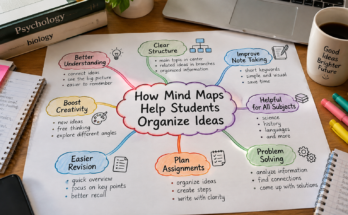
Use diagrams, flowcharts, tables, and mind maps while studying.
Suppose you are studying the digestive system.
Instead of only reading paragraphs, draw the path food follows through the body.
Write the function of each organ next to it.
If you are studying a process, create a flowchart.
For example:
Stimulus
Receptor
Nervous system
Response
A simple diagram can sometimes explain a concept more clearly than a page of notes.
Visual learning is especially useful when the topic contains processes, relationships, stages, cycles, or classifications.
Compare Similar Concepts
Students often lose marks because they confuse similar ideas.
One useful study technique is comparison.
Create a simple table and compare related concepts.
For example:
Mitosis and meiosis
Speed and velocity
Mass and weight
Revenue and profit
Primary memory and secondary memory
Learning the differences between related ideas improves conceptual clarity.
Do not only memorize the differences.
Ask why the difference matters.
Understanding the reason behind each difference makes it easier to remember.
Learn From Mistakes
Mistakes are extremely useful when preparing for concept based exams.
When you answer a practice question incorrectly, do not simply look at the correct answer and move forward.
Ask why your answer was wrong.
Did you misunderstand the concept?
Did you confuse two terms?
Did you ignore an important condition?
Did you remember the rule but apply it incorrectly?
Understanding the reason behind a mistake prevents the same mistake from happening again.
Keep a small notebook for difficult questions and common mistakes.
Review this notebook before the exam.
It can become one of your most valuable revision tools.
Study in Short Focused Sessions
Long study sessions are not always effective.
After studying continuously for a long time, attention can decrease.
Short focused study sessions can help you stay mentally active.
For example, you might study one concept for thirty or forty minutes and then take a short break.
During the study session, remove distractions.
Keep your phone away unless you need it for learning.
Focus on one topic at a time.
A focused forty minute session is often more valuable than several hours of distracted reading.
The quality of study matters more than simply counting study hours.
Review Concepts Regularly
Conceptual understanding can weaken if you do not review it.
Instead of studying a chapter once and forgetting about it until the exam, review important concepts over several days.
A simple review system might look like this:
Review the topic the same day.
Review it again after a few days.
Review it again after one week.
Test yourself before the exam.
Each review can be shorter than the original study session.
Regular revision keeps important concepts active in your memory.
It also gives you more chances to identify weak areas.
Combine Different Topics During Practice
After learning topics separately, practice them together.
Real exams rarely tell you exactly which concept should be used.
You may need to identify the correct method yourself.
Mixed practice teaches your brain to recognize which concept applies to a question.
For example, in mathematics, instead of solving twenty questions from one chapter, practice questions from several chapters.
In science, mix questions about different processes.
This makes practice slightly harder, but it prepares you better for actual exams.
Practice Explaining Cause and Effect
Many concept based questions are built around cause and effect.
While studying, identify what causes an event and what happens as a result.
For every major concept, ask:
What causes this?
What happens because of it?
What changes if the cause disappears?
For example, if you are studying climate science, do not only remember that greenhouse gases affect temperature.
Understand how the process works and what consequences can follow.
Cause and effect thinking helps students answer explanation based questions more confidently.
Do Not Ignore Definitions
Concept based learning does not mean definitions are useless.
Definitions still provide the foundation of many subjects.
The difference is that you should understand what the definition means instead of memorizing words without understanding.
Learn important definitions, but then connect them with examples, explanations, and applications.
For every definition, try answering three questions:
What does it mean?
Why is it important?
Can I give an example?
This approach turns a memorized definition into usable knowledge.
Practice With Past Papers
Past papers are very useful because they show how examiners test concepts.
While solving past papers, do not only focus on getting the correct answer.
Study the style of the questions.
Notice words such as:
Explain
Compare
Evaluate
Analyze
Predict
Justify
Describe why
Apply
These words often show that the examiner is testing understanding.
After solving a question, compare your answer with the expected answer if one is available.
Look for missing reasoning, incomplete explanations, or unclear language.
Learn to Read Questions Carefully
Sometimes students know the concept but still lose marks because they misunderstand the question.
Read each question carefully.
Identify exactly what it is asking.
Look for key words.
For example, explain and list are not the same.
A list usually requires points.
An explanation requires reasons and connections.
Similarly, compare requires you to discuss similarities or differences between ideas.
Before writing your answer, take a moment to decide what kind of response the question requires.
This simple habit can improve exam performance.
Build Understanding Step by Step
Difficult concepts usually become easier when they are divided into smaller parts.
Do not try to understand an entire complicated chapter at once.
Break it into sections.
Understand the first idea before moving to the next.
Suppose you are studying cellular respiration.
First understand why cells need energy.
Then understand the role of glucose.
Then study the main stages of respiration.
Finally, connect the stages together.
Building understanding step by step reduces confusion.
Use Your Textbook as the Main Learning Tool
Videos, websites, and online notes can be useful, but your textbook should remain an important source when preparing for an academic exam.
Books usually present concepts in a structured sequence.
They also include definitions, diagrams, examples, explanations, and practice questions.
Read carefully instead of quickly.
When you find an important paragraph, stop and think about what it means.
Write a short note in your own words.
Do not try to copy everything.
The purpose of reading is to understand the author’s explanation.
Create Concept Questions While Studying
Instead of waiting for your teacher to give you questions, create your own.
After completing a topic, write five or ten questions.
For example:
Why does this process happen?
What would happen if one factor changed?
How is this concept different from another concept?
Where can this idea be applied?
What is a real life example?
Creating questions forces you to think like an examiner.
It also reveals whether you truly understand the topic.
Study Difficult Topics When Your Mind Is Fresh
Conceptual learning requires concentration.
Try to study difficult topics when your energy and attention are strong.
Some students concentrate better in the morning.
Others study better in the evening.
Choose the time when you can think clearly.
Use your strongest study time for topics that require reasoning.
Use lighter study periods for simple revision, reading, or organizing notes.
This helps you use your mental energy more effectively.
Develop Confidence Through Understanding
Students often feel nervous about concept based exams because they cannot predict every possible question.
You cannot memorize every question that might appear.
But you do not need to.
If you understand the concept deeply, you can answer many different questions based on the same idea.
That is the real advantage of conceptual learning.
Strong understanding creates flexibility.
Instead of thinking:
I hope the exam contains the questions I memorized.
You can think:
I understand the topic, so I can work through different questions.
That is a much stronger position.
Final Thoughts
Learning how to study effectively for concept based exams is mainly about changing your study goal.
Do not study only to remember information.
Study to understand it.
Ask why and how.
Explain concepts in your own words.
Connect ideas with examples.
Practice active recall.
Solve application questions.
Review your mistakes.
Use diagrams and comparisons.
Practice past papers.
Most importantly, give yourself enough time to think about what you are studying.
Concept based learning may feel slower at the beginning because it requires more thinking than simple memorization. However, once the ideas become clear, revision becomes easier and your knowledge becomes much more useful.
A student who understands a topic can usually handle questions written in many different ways.
That is why deep understanding is one of the most effective ways to prepare for concept based exams.
SEO Focus Keyword
How to study effectively for concept based exams
Related Keywords
Concept based exam preparation
How to study for conceptual exams
Effective study methods for students
How to understand difficult concepts
Conceptual learning techniques
Study tips for exams
How to prepare for application based questions
Effective exam preparation methods
How to improve conceptual understanding