Education has changed a lot over the years. Traditional classrooms usually follow a simple pattern. A teacher explains a lesson during class, students listen and take notes, and later they complete homework at home. This method has been used for generations, but modern teaching methods are now changing how students learn.
One of the most interesting approaches is flipped classroom learning.
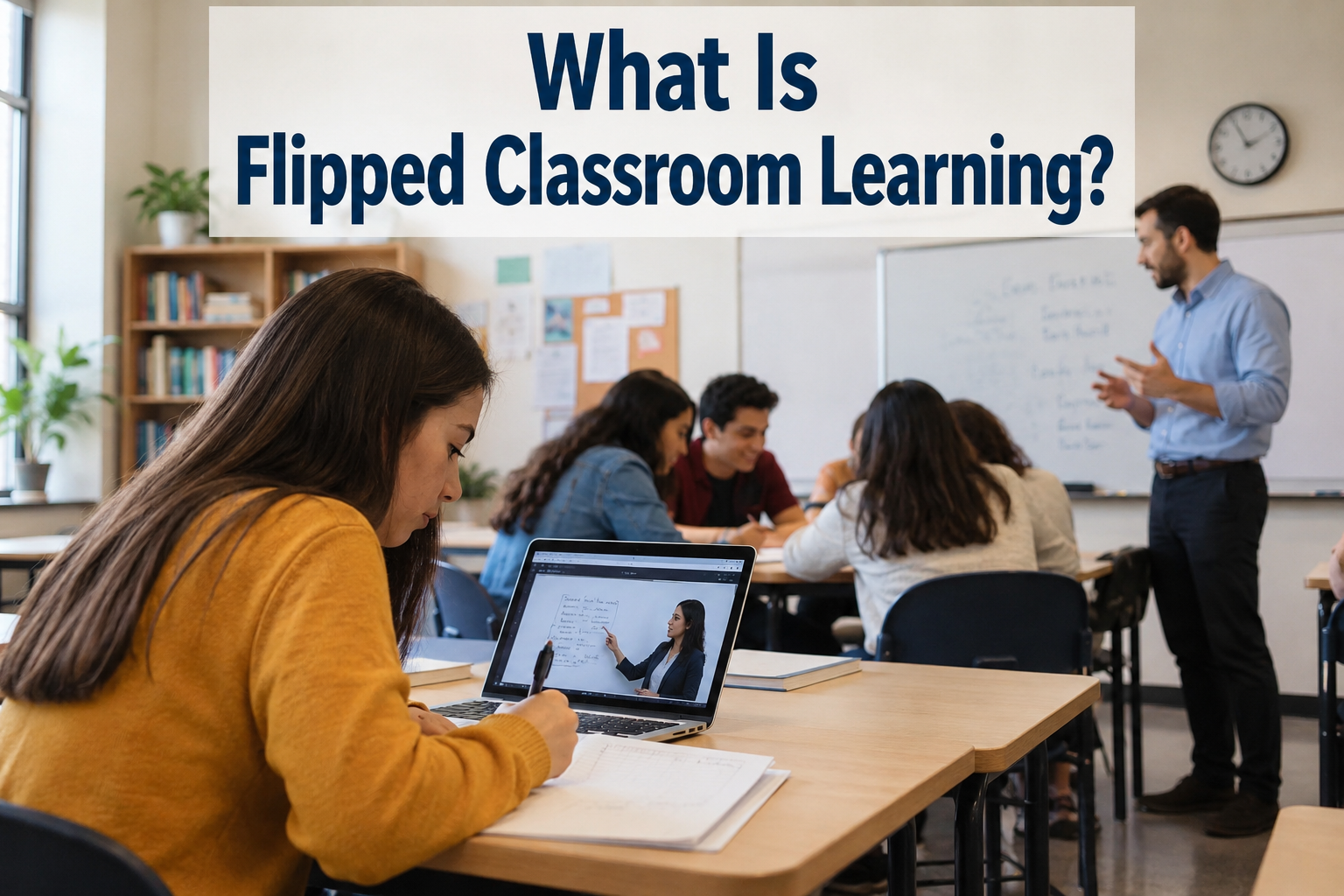
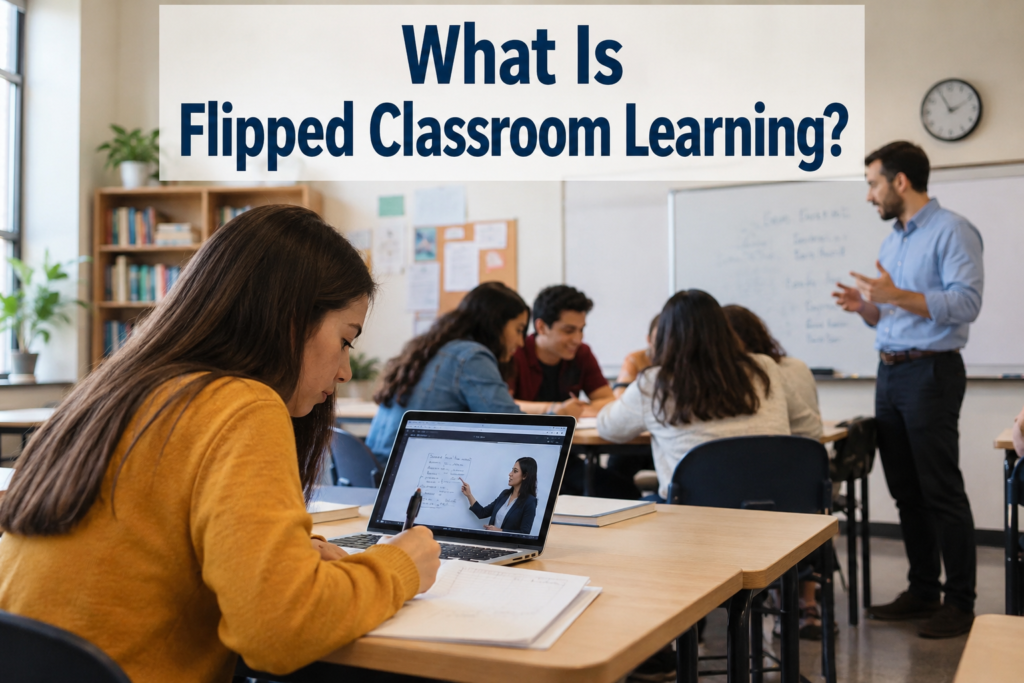
Flipped classroom learning changes the usual order of teaching. Instead of learning new material for the first time in class, students often study basic concepts before coming to the classroom. They may watch a lesson video, read a chapter, review slides, or complete a short learning activity at home. Classroom time is then used for discussion, problem solving, practice, projects, and teacher support.
This approach gives students more time to work with ideas instead of only listening to explanations.
In this article, I will explain what flipped classroom learning is, how it works, why schools use it, its advantages, its challenges, and how students can benefit from it.
What Is Flipped Classroom Learning?
Flipped classroom learning is a teaching approach in which students study basic lesson content before attending class and use classroom time for active learning.
The word flipped is used because the traditional classroom structure is reversed.
In a traditional classroom, the teacher usually introduces new information during class. Students then practice that information through homework.
In a flipped classroom, students first become familiar with the topic outside the classroom. When they come to class, they use what they learned to solve problems, ask questions, work with classmates, and complete practical activities.
For example, imagine a mathematics class.
In a traditional lesson, the teacher might spend most of the class explaining a new formula. Students would then go home and answer questions using that formula.
In a flipped classroom, students might watch a short explanation of the formula before class. During the lesson, the teacher can spend more time helping students solve different problems and understand difficult parts of the topic.
This simple change can make classroom time more interactive.
How Does a Flipped Classroom Work?
A flipped classroom usually has two main stages.
The first stage happens before class.
Students are introduced to the lesson through learning materials provided by the teacher. These materials can include videos, digital notes, textbook readings, recorded lectures, presentations, podcasts, or short quizzes.
The goal is not always to master the entire topic before class. Students mainly need to understand the basic idea.
The second stage happens during class.
Instead of spending the whole lesson listening to a lecture, students become more active. They may solve problems, complete experiments, discuss questions, participate in group activities, analyze examples, or work on projects.
The teacher moves around the classroom, answers questions, explains difficult concepts, and provides individual support.
This means that classroom time becomes a place for practice and understanding rather than only information delivery.
Why Was Flipped Classroom Learning Developed?
One important reason behind flipped classroom learning is the desire to use classroom time more effectively.
Teachers often have limited time with students. If most of that time is spent delivering information, there may not be enough time left for practice, discussion, or individual help.
Students also learn at different speeds.
Some students understand a lecture immediately, while others need more time. In a normal classroom, the teacher usually has to continue with the lesson even if some students are still confused.
Recorded lessons and reading materials can help solve this problem.
A student can pause a video, replay an explanation, take notes slowly, or review the material again. This gives learners more control over the speed of their learning.
When they arrive in class, they can ask questions about areas they did not understand.
Traditional Classroom Versus Flipped Classroom
The difference between a traditional classroom and a flipped classroom can be understood by looking at how learning time is used.
In a traditional classroom, students often spend most of the lesson listening. Their independent practice happens later.
In a flipped classroom, students review basic information first and spend classroom time applying that information.
The role of the teacher also changes.
In traditional teaching, the teacher is often the main source of information. In flipped learning, the teacher becomes more like a guide who helps students understand and apply knowledge.
The role of students changes as well.
Students are expected to take more responsibility for preparing before class and participating during lessons.
This does not mean that teachers stop teaching. In fact, teachers may provide even more support because they have more time to work directly with students.
Main Benefits of Flipped Classroom Learning
Flipped classroom learning can offer several educational benefits when it is planned carefully.
Students Can Learn at Their Own Pace
One of the biggest advantages is flexibility.
During a live classroom lecture, students cannot easily stop the teacher every few minutes. But when students are learning from a video or digital lesson, they can pause whenever needed.
They can replay difficult sections and move more quickly through parts they already understand.
This can be especially useful when students are studying complex subjects.
More Time for Practice
Practice plays an important role in learning.
Students may understand an explanation but still struggle when they try to use the information themselves.
A flipped classroom gives students more classroom time for practice.
Instead of completing difficult exercises alone at home, students can work on them while the teacher is available.
This allows misunderstandings to be corrected earlier.
More Interaction With the Teacher
Teachers often want to provide individual attention, but traditional lectures can take up most of the lesson.
Flipped learning can create more opportunities for direct interaction.
A teacher can spend time with individual students, small groups, or the entire class depending on their needs.
Students who are struggling can receive additional help while students who understand the topic can continue with more advanced activities.
Encourages Active Learning
Active learning happens when students do something with information instead of only receiving it.
This can include explaining an idea, solving a problem, creating something, asking questions, discussing examples, or comparing different solutions.
Flipped classrooms often create more opportunities for this type of learning.
Students become participants in the lesson rather than only listeners.
Helps Teachers Identify Problems
When students complete activities during class, teachers can observe how they think.
This can help teachers notice common mistakes or misunderstandings.
For example, if several students solve a science problem incorrectly, the teacher can immediately explain the difficult concept again.
This feedback can improve the learning process.
Flipped Classroom Learning and Student Engagement
Student engagement is an important part of education.
Students often learn better when they are actively involved in lessons.
Flipped classroom learning can make lessons more engaging because students may participate in discussions, experiments, case studies, practical exercises, or collaborative projects.
Instead of listening for the entire lesson, students have a reason to communicate and think.
However, engagement depends on how the classroom is designed.
Simply asking students to watch a video before class does not automatically make learning better.
The classroom activities must encourage students to use and understand the information.
The Role of Technology in Flipped Learning
Technology has made flipped classrooms easier to create.
Teachers can now record lessons, share videos, upload notes, create online quizzes, and communicate with students through learning platforms.
Students can access materials from computers, tablets, or smartphones.
Video lessons are especially common because they allow teachers to explain ideas in a familiar way.
However, technology is not the main purpose of flipped learning.
A flipped classroom can also work with textbooks, printed worksheets, or reading assignments.
The most important idea is not the device being used.
The main idea is that students receive basic information before class so classroom time can be used for deeper learning.
What Happens During a Flipped Classroom Lesson?
A flipped classroom lesson can look very different from a traditional lecture.
The teacher might start by asking a few questions about the material students reviewed before class.
This helps check understanding.
Students may then move into individual work or group activities.
For example, in a science class, students may conduct an experiment related to the concept they studied.
In a mathematics class, they may solve several types of problems.
In a language class, they might practice speaking, writing, or analyzing a text.
In a history class, students might discuss causes and effects of an important event.
The teacher supports students throughout these activities.
The classroom becomes a place where knowledge is used rather than simply presented.
Flipped Classroom Learning and Independent Study
Flipped learning also encourages students to develop independent study habits.
Students have to prepare before class.
This means they must manage their time, follow instructions, and take responsibility for understanding basic material.
These habits can become useful beyond school.
University students and working professionals often need to learn independently. They may read reports, watch training materials, research new ideas, or prepare before meetings.
Learning how to study independently can therefore be a valuable long term skill.
Challenges of Flipped Classroom Learning
Although flipped learning has many advantages, it also has challenges.
It may not work equally well in every classroom or for every student.
Students May Not Prepare Before Class
The biggest challenge is preparation.
Flipped learning depends on students reviewing the lesson material before coming to class.
If students do not prepare, they may find classroom activities difficult.
Teachers may need to create simple systems to encourage preparation.
Short quizzes, discussion questions, or small assignments can help.
Technology Access Can Be a Problem
Not every student has equal access to the internet or digital devices.
If a flipped classroom depends heavily on online videos, some learners may face difficulties.
Schools need to consider this before using the method.
Teachers can sometimes provide downloadable files, printed materials, or school computer access as alternatives.
Teachers Need Time to Prepare
Creating a flipped lesson can require extra preparation.
Teachers may need to record videos, design activities, prepare online materials, and organize classroom tasks.
The process can take time at the beginning.
However, some materials can be reused in future classes.
Students Need Good Study Habits
Some students are used to depending heavily on the teacher.
When they are asked to study independently before class, they may find the process difficult at first.
Teachers may need to teach students how to take notes, manage time, identify important ideas, and prepare questions.
Is Flipped Classroom Learning Suitable for Every Subject?
Flipped learning can be used in many subjects, but the exact method may vary.
In mathematics, students can watch explanations before class and solve problems during the lesson.
In science, they can review scientific concepts at home and use classroom time for experiments.
In languages, students can study grammar or vocabulary before class and practice communication with classmates.
In business studies, students can read a case study before class and discuss possible decisions during the lesson.
In computer science, students can review programming concepts first and spend classroom time writing and correcting code.
The method can be adapted depending on the subject and learning goals.
The Importance of Good Learning Materials
The quality of pre class materials is important.
If the materials are too long, confusing, or difficult, students may lose interest.
Short and focused lessons are often easier to understand.
Teachers should explain the most important ideas clearly and provide guidance about what students should focus on.
Students should also know what they are expected to do with the material.
For example, they might be asked to write three key points, answer a few questions, or identify something they did not understand.
This makes preparation more meaningful.
How Students Can Succeed in a Flipped Classroom
Students can get more value from flipped classroom learning by developing a simple routine.
First, they should review the learning material before class.
It is useful to choose a quiet place and avoid distractions.
Students should take notes while watching or reading.
Writing down important ideas can improve concentration.
They should also mark anything that feels confusing.
These questions can then be discussed with the teacher.
Another useful habit is reviewing the material again after class.
The pre class lesson introduces the idea, classroom activities develop understanding, and later review helps strengthen memory.
This creates a complete learning cycle.
The Teacher’s Role in a Flipped Classroom
Some people may think flipped learning reduces the role of teachers.
In reality, the teacher remains very important.
The teacher decides what students should study before class.
The teacher also designs classroom activities, explains difficult concepts, checks understanding, provides feedback, and supports individual learners.
The main difference is how teaching time is used.
Instead of spending the entire lesson delivering information, the teacher has more opportunities to interact with students.
This can make teaching more responsive to student needs.
Can Flipped Learning Improve Understanding?
Flipped classroom learning is designed to create more time for deeper understanding.
Students do not simply receive information.
They have opportunities to apply it.
This matters because knowing a definition is not always the same as understanding a concept.
For example, a student may memorize a mathematics formula without knowing when to use it.
Classroom practice allows students to see how the formula works in different situations.
The same idea applies to many subjects.
Real understanding develops when students connect information with examples, questions, problems, and practical situations.
Flipped Learning and Collaborative Learning
Group work is also common in flipped classrooms.
Students may solve problems together, discuss ideas, or complete projects.
This type of collaboration can expose students to different ways of thinking.
A classmate may explain an idea in a way that is easier to understand.
Students also learn communication skills when they explain their reasoning.
However, group work should have a clear purpose.
The activity should help students understand the lesson rather than simply keep them busy.
Does Flipped Classroom Learning Replace Traditional Teaching?
Flipped learning does not have to completely replace traditional teaching.
Many teachers use a combination of methods.
They may use flipped learning for some topics and normal classroom instruction for others.
Sometimes a direct classroom explanation is still the most efficient method.
The goal is not to follow one teaching method all the time.
The goal is to choose a method that helps students understand the subject.
This flexible approach can make education more practical.
The Future of Flipped Classroom Learning
Flipped learning is closely connected with the wider shift toward flexible and personalized education.
Digital learning platforms make it easier for students to access lessons before class.
Schools are also becoming more interested in active learning, collaboration, problem solving, and independent study.
Because of these changes, flipped learning may continue to influence classroom design.
However, successful flipped learning still depends on good teaching.
Technology alone cannot create meaningful education.
Teachers need to understand their students, prepare useful materials, and design activities that support learning.
Final Thoughts
Flipped classroom learning is a teaching approach that changes the traditional order of classroom instruction.
Students usually review basic lesson material before class and use classroom time for active learning, practice, discussion, and problem solving.
The approach can give students more control over their learning pace and provide teachers with more time to support individual learners.
It can also encourage active learning, independent study, classroom interaction, and deeper understanding.
At the same time, flipped learning requires preparation from both teachers and students. Access to technology, good study habits, useful learning materials, and well planned classroom activities are all important.
Flipped classroom learning is not simply about watching videos at home. Its real purpose is to make better use of classroom time.
When students come to class already familiar with the basic ideas, teachers can focus more on questions, practice, feedback, and understanding.
For this reason, flipped classroom learning has become an important part of the discussion about modern education. It shows how a small change in the structure of a lesson can create new opportunities for students to participate more actively in their own learning.