Education has changed significantly during the past few years. Traditional classrooms are still important, but digital technology has created new ways for students to learn. One of the most practical developments in modern education is hybrid learning.
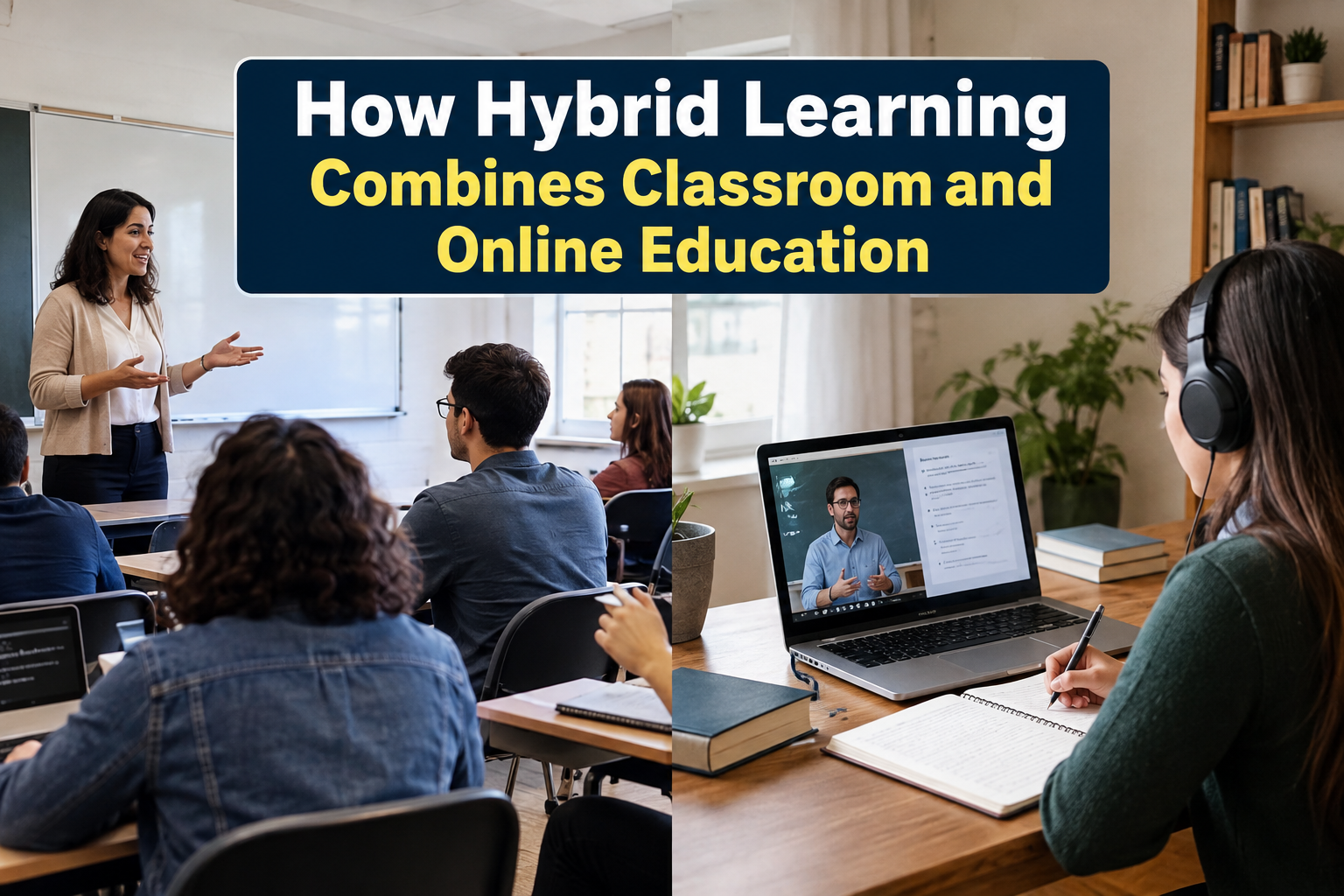
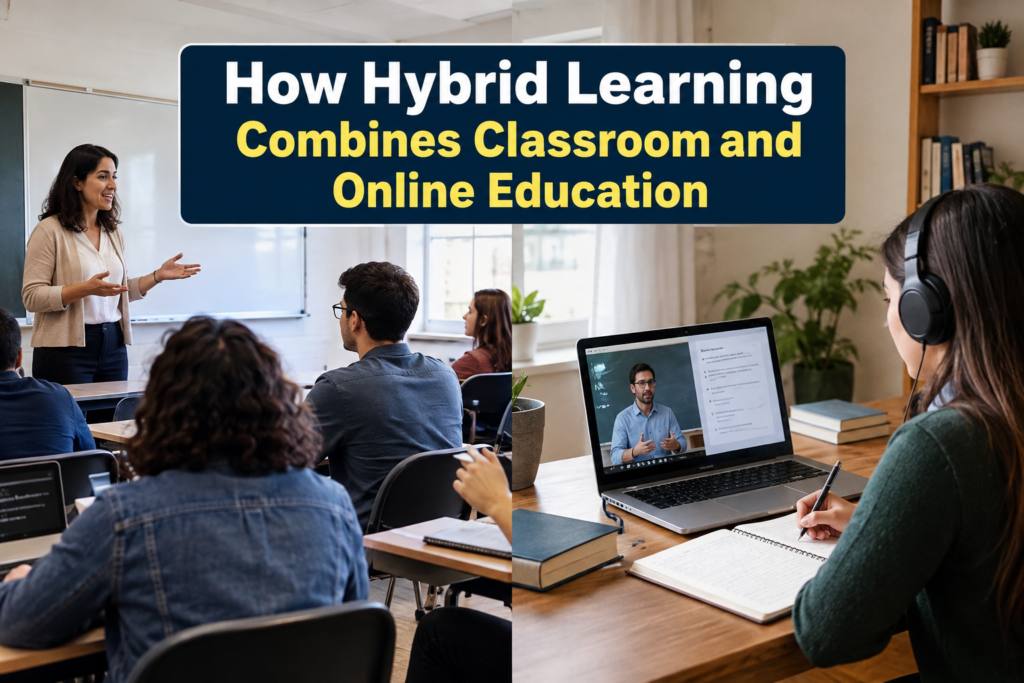
Hybrid learning combines classroom education with online learning. Students attend some lessons in a physical classroom where they interact directly with teachers and classmates. At other times, they use digital platforms to watch lessons, complete activities, read learning materials, or participate in discussions from home.
The main purpose of hybrid learning is not simply to add technology to education. It is to combine the strongest features of classroom teaching and online education in a thoughtful way.
After reading about different teaching approaches, I found hybrid learning interesting because it gives students more flexibility without completely removing the personal connection that exists in a classroom. It can create a learning environment where students receive guidance from teachers while also developing independence and digital skills.
What Is Hybrid Learning?
Hybrid learning is an educational approach that combines face to face classroom instruction with online learning activities.
For example, a student may attend school or university three days a week and complete online learning activities during the remaining days. In another system, students may attend every day but complete certain lessons, assignments, discussions, or research activities online.
The exact structure can vary depending on the institution, subject, age of students, and available technology.
The important point is that classroom learning and digital learning are both planned parts of the educational experience.
Hybrid learning should not be confused with simply uploading homework to the internet. A well designed hybrid course connects classroom activities with online activities so that both support the same learning goals.
How Classroom Learning Supports Hybrid Education
Classroom education continues to play an important role in hybrid learning.
Physical classrooms allow students to communicate directly with teachers. They can ask questions, participate in discussions, perform practical activities, and receive immediate guidance.
This personal interaction can be especially useful when students are learning difficult concepts.
A teacher can observe students during a classroom lesson and notice whether they appear confused or confident. The teacher can then adjust the explanation based on the students’ reactions.
Classroom learning also gives students opportunities to develop communication and teamwork skills.
Group discussions, presentations, experiments, and practical exercises are often easier when students are physically present together.
For this reason, hybrid learning does not try to replace classrooms. Instead, it uses classroom time for activities that benefit from personal interaction.
The Role of Online Education in Hybrid Learning
Online education adds flexibility to the learning process.
Students can access digital lessons, reading materials, recorded lectures, quizzes, and assignments through learning platforms.
One important advantage is that students can often review materials several times.
In a traditional classroom, a teacher may explain a topic once or twice. If students forget part of the explanation, they may have difficulty remembering it later.
With recorded online materials, students can watch the explanation again.
They can pause a video, take notes, return to a difficult section, and continue learning at a comfortable pace.
This can make online learning a valuable part of hybrid education.
How Hybrid Learning Connects Classroom and Online Activities
The strongest hybrid learning systems connect both environments rather than treating them as separate parts.
Imagine a science class studying the human digestive system.
Before attending the classroom lesson, students might watch a short video explaining the main organs involved in digestion.
They may also read a short online chapter and answer a few basic questions.
When students arrive in class, the teacher does not need to spend the entire lesson introducing basic definitions. Instead, the class can focus on diagrams, experiments, questions, group discussions, and deeper explanations.
After the lesson, students may complete an online quiz to check their understanding.
In this example, online learning prepares students for classroom learning, while classroom activities help students develop deeper understanding.
This connection is one of the most important features of hybrid learning.
Hybrid Learning Gives Students More Flexibility
One reason hybrid learning has become popular is flexibility.
Traditional education usually requires students to follow a fixed schedule and location.
Hybrid learning can provide more choices.
Some learning activities can be completed from home, a library, or another suitable location.
Students may also have more control over when they complete certain assignments.
This flexibility can be useful for university students, working learners, and students with other responsibilities.
However, flexibility does not mean that students can completely ignore schedules.
Successful hybrid courses usually include deadlines, lesson plans, assessments, and regular communication.
The goal is to provide flexibility while maintaining structure.
Students Can Learn at Their Own Pace
Every student learns differently.
Some students understand a new concept quickly. Others need more time and repetition.
In a traditional classroom, the teacher must teach many students at the same time. This sometimes makes it difficult to match the learning speed of every student.
Online components can help reduce this problem.
Students can review digital lessons according to their personal needs.
A student who understands a topic easily may move forward quickly.
Another student may replay videos, read additional explanations, or complete more practice exercises.
This ability to control the pace of learning can make hybrid education more supportive for different types of learners.
Hybrid Learning Encourages Independent Learning
Students need more than subject knowledge to succeed in education.
They also need to learn how to manage their own learning.
Hybrid learning can encourage independence because students are responsible for completing some activities outside the classroom.
They may need to organize their schedule, check online materials, complete assignments, and prepare questions before attending class.
Over time, these habits can help students become more responsible learners.
Independent learning is especially important in higher education and professional life because people are often expected to learn new skills without constant supervision.
The Teacher’s Role in Hybrid Learning
Technology does not reduce the importance of teachers.
In many ways, the teacher becomes even more important because hybrid learning requires careful planning.
Teachers must decide which activities should happen in the classroom and which activities can be completed online.
They also need to make sure students understand how different activities are connected.
For example, teachers might use online lessons for basic information while saving classroom time for discussion, problem solving, projects, and practical work.
Teachers may also monitor online quizzes and assignments to identify students who need additional support.
This information can help teachers prepare future classroom lessons.
Hybrid Learning Can Improve Classroom Discussions
Students often participate more confidently in classroom discussions when they have already studied basic information before attending the lesson.
For example, a teacher may ask students to read an article online before class.
Students arrive with some background knowledge about the topic.
Instead of spending most of the lesson explaining basic facts, the teacher can ask deeper questions.
Students can compare ideas, discuss different viewpoints, and explain what they learned.
This can make classroom time more active and meaningful.
Digital Tools Used in Hybrid Learning
Hybrid education depends on several types of digital tools.
Learning management systems are commonly used to organize lessons, assignments, grades, and communication.
Students may also use video conferencing platforms, digital libraries, educational applications, online quizzes, presentation tools, and discussion forums.
Recorded lectures are another common resource.
Teachers can create short videos explaining important ideas and allow students to watch them before or after class.
The purpose of these tools should always be to support learning.
Technology should not be added simply because it looks modern.
A simple digital tool that helps students understand a topic is more valuable than a complicated platform that creates confusion.
Hybrid Learning Supports Different Learning Styles
Students often have different preferences when learning.
Some prefer listening to explanations.
Others understand information better through reading, visual examples, discussion, or practical activities.
Hybrid learning can provide several ways to study the same concept.
A lesson might include a classroom explanation, a digital video, a reading activity, an interactive quiz, and a group project.
Students can experience the topic through different formats.
This variety can help make lessons more interesting and accessible.
Classroom Time Can Be Used More Effectively
Traditional classroom lessons sometimes spend a large amount of time delivering basic information.
Hybrid learning allows part of this information to be delivered online.
Students may read chapters or watch introductory videos before attending class.
Teachers can then use classroom time for activities that require more interaction.
These activities may include problem solving, experiments, discussions, presentations, group projects, and individual guidance.
This approach can make classroom learning more active.
Instead of only listening to lectures, students become involved in the learning process.
Hybrid Learning and Student Communication
Communication is extremely important in any learning environment.
Hybrid learning provides several communication methods.
Students can speak with teachers during classroom lessons and communicate through digital platforms outside the classroom.
They may send questions through learning systems, participate in online discussions, or work with classmates on shared projects.
This combination can help students stay connected even when they are not physically present in the classroom.
Teachers also need to provide clear instructions.
Students should know when they need to attend class, what they need to complete online, and when assignments are due.
Without clear communication, hybrid learning can become confusing.
Challenges of Hybrid Learning
Although hybrid learning offers many benefits, it also creates challenges.
One major challenge is access to technology.
Students may need a reliable internet connection, computer, tablet, or smartphone to complete online activities.
Not every student has equal access to these resources.
Schools and universities need to consider this issue carefully when designing hybrid programs.
Technical problems can also interrupt learning.
Students may experience internet failure, software problems, or difficulty using digital platforms.
Teachers may also need training to use educational technology effectively.
Another challenge is self discipline.
Students who are used to constant classroom supervision may find it difficult to manage online learning independently.
This is why hybrid learning needs clear schedules, regular communication, and teacher support.
Avoiding Too Much Screen Time
Digital learning can increase the amount of time students spend looking at screens.
Long periods of screen use may reduce concentration and create physical discomfort.
Hybrid education should therefore include a healthy balance.
Not every online activity needs to involve watching videos.
Teachers can encourage students to read printed materials, write notes, complete practical exercises, conduct observations, or work on projects away from screens.
The purpose of hybrid learning is balance.
Technology should support education rather than control the entire learning experience.
How Assessment Works in Hybrid Learning
Assessment can take place both online and in the classroom.
Online quizzes are useful for checking basic understanding.
They can provide quick feedback and help students discover areas where they need more practice.
Classroom assessments may include presentations, written tests, experiments, discussions, and practical activities.
Teachers can also use projects that combine both learning environments.
For example, students may research a topic online, discuss their findings in class, and then create a final presentation.
Using different types of assessment can provide a broader understanding of student progress.
Hybrid Learning Can Develop Digital Skills
Modern workplaces increasingly depend on digital communication and technology.
Hybrid education gives students opportunities to develop practical digital skills while completing normal academic work.
Students may learn how to organize digital files, participate in online meetings, use collaborative documents, search for reliable information, and communicate professionally through digital platforms.
These skills can be valuable in university and future employment.
However, students also need guidance about responsible technology use.
They should learn about online privacy, reliable information, digital communication, and academic honesty.
The Importance of Student Engagement
A successful hybrid learning system must keep students actively involved.
Simply giving students videos and online assignments is not enough.
Students need opportunities to interact with teachers, classmates, and learning materials.
Online quizzes, discussions, group projects, practical activities, and regular feedback can improve engagement.
Teachers can also connect online activities with classroom discussions.
For example, students may answer a question in an online forum and then discuss different responses during the next classroom lesson.
When students understand the connection between activities, learning becomes more meaningful.
Parents and Hybrid Learning
For younger students, parents may also play an important role.
Parents can help children organize schedules, create suitable study spaces, and develop healthy technology habits.
However, parents should not complete assignments for students.
The purpose is to support learning independence.
Schools can help parents by providing clear information about schedules, platforms, assignments, and expectations.
Good communication between teachers, students, and parents can reduce confusion.
Hybrid Learning in Universities
Universities have widely adopted different forms of hybrid education.
University students often have greater independence than school students, making flexible learning especially useful.
A university course may include physical lectures, online readings, recorded lessons, digital discussions, research activities, and classroom seminars.
Students may complete basic learning independently and use classroom time for deeper academic discussion.
Hybrid learning can also help universities offer courses to students who live far from campus or have work responsibilities.
Hybrid Learning in the Workplace
The idea of hybrid learning is not limited to schools and universities.
Companies also use similar methods for employee training.
Workers may complete online training modules and later attend practical workshops.
For example, employees may study safety procedures online before attending a physical training session where they practice those procedures.
This combination can reduce training time while still providing practical experience.
It also allows employees to review digital materials whenever necessary.
How Students Can Succeed in Hybrid Learning
Students can improve their hybrid learning experience by developing good study habits.
Creating a regular study schedule is useful.
Students should check their learning platform regularly and keep track of assignments and deadlines.
Taking notes during online lessons can also improve concentration.
Students should avoid treating online lessons as passive entertainment.
They should pause, think, write questions, and review important ideas.
A quiet study environment can also improve focus.
Most importantly, students should ask for help when they do not understand something.
Hybrid learning provides flexibility, but students still need communication and guidance.
The Future of Hybrid Learning
Hybrid learning is likely to remain an important part of modern education.
Digital technology continues to improve, and educational institutions are learning how to use it more effectively.
Future hybrid classrooms may include more interactive digital resources, personalized learning systems, virtual laboratories, intelligent tutoring tools, and collaborative platforms.
However, technology will probably not remove the need for teachers and physical classrooms.
Education is also a social experience.
Students learn from conversations, relationships, teamwork, and personal guidance.
The most effective learning systems may therefore be those that combine human interaction with useful technology.
Why Balance Is the Key to Hybrid Learning
The main strength of hybrid learning is balance.
Classroom education provides personal interaction, immediate feedback, social development, and practical experiences.
Online education provides flexibility, repeated access to materials, digital resources, and opportunities for independent learning.
When these two approaches are carefully connected, students can benefit from both.
Problems usually appear when one side becomes too dominant.
Too much online learning may reduce personal interaction.
Too much classroom instruction may reduce flexibility and opportunities for independent learning.
A balanced hybrid system uses each environment for the activities it supports best.
Final Thoughts
Hybrid learning combines classroom and online education to create a flexible and connected learning experience.
Students can benefit from direct interaction with teachers while also using digital resources to study at their own pace.
Classroom time can focus on discussion, collaboration, practical activities, and deeper learning. Online activities can provide readings, videos, quizzes, research opportunities, and additional practice.
The success of hybrid learning depends on good planning, clear communication, suitable technology, and active participation from students.
After studying the idea more closely, I see hybrid learning as more than a mixture of classroom lessons and online activities. It is a method of organizing education so that each learning environment is used for the purpose it handles best.
When teachers maintain the right balance between technology and human interaction, hybrid learning can create a flexible, practical, and engaging educational experience for modern students.
Frequently Asked Questions
What is hybrid learning in simple words?
Hybrid learning is a method of education that combines physical classroom teaching with online learning activities.
What is the main benefit of hybrid learning?
One of the main benefits is flexibility. Students can learn through direct classroom interaction while also accessing digital materials at convenient times.
Is hybrid learning the same as online learning?
No. Online learning usually takes place mainly through the internet, while hybrid learning combines online education with physical classroom instruction.
Why do schools use hybrid learning?
Schools may use hybrid learning to provide flexible learning, improve access to educational resources, encourage independent study, and make classroom time more interactive.
Can hybrid learning improve student independence?
Yes. Students often need to manage online lessons, assignments, schedules, and learning resources independently, which can help develop responsibility and time management skills.
What technology is used in hybrid learning?
Common tools include learning management systems, video platforms, digital libraries, online quizzes, shared documents, educational applications, and discussion forums.
What are the challenges of hybrid learning?
Common challenges include limited internet access, technical problems, increased screen time, poor time management, and difficulty maintaining student engagement.
Will hybrid learning replace traditional classrooms?
Hybrid learning is more likely to complement classroom education than completely replace it. Physical classrooms remain valuable for communication, practical activities, teamwork, and direct teacher support.