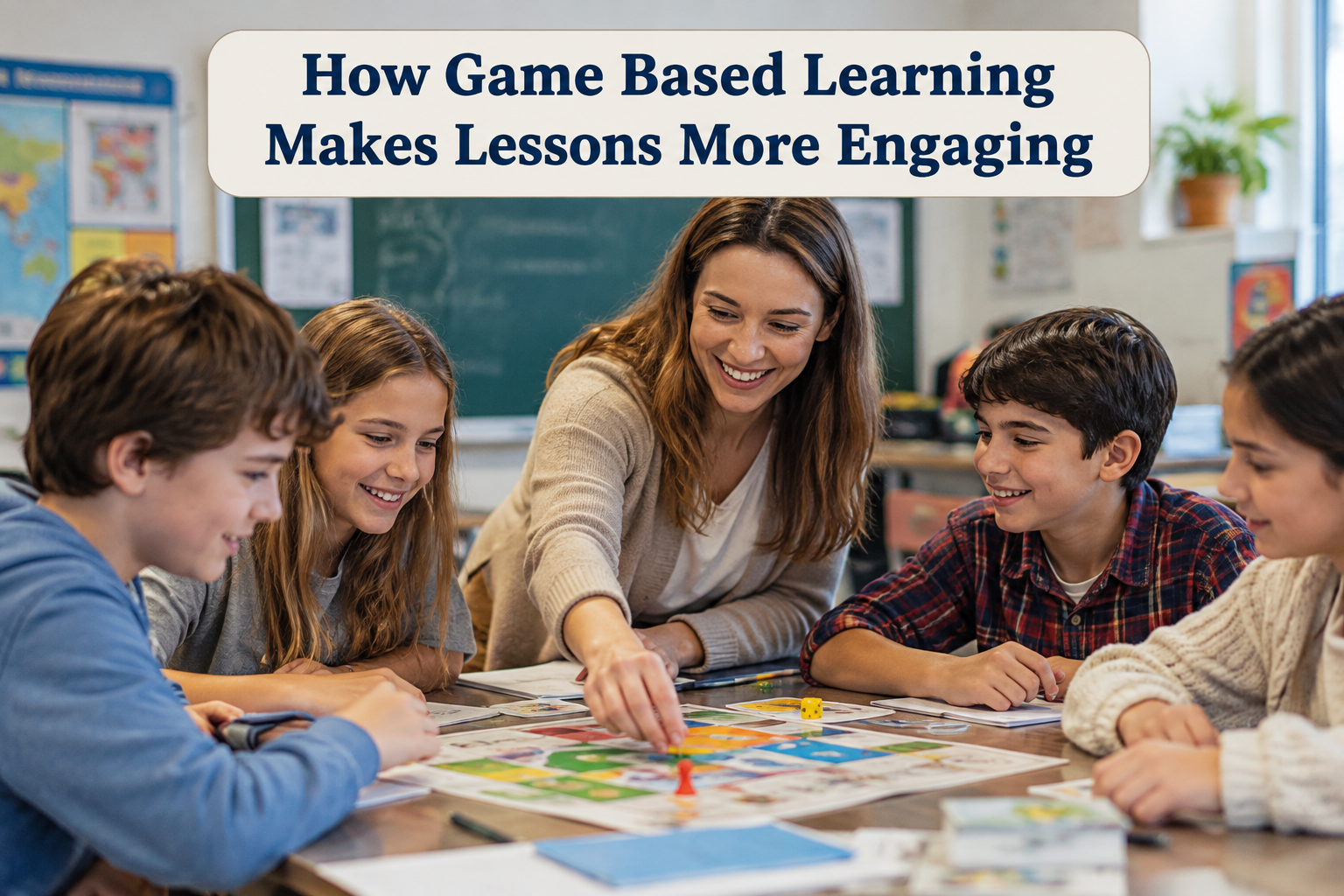
Education becomes more effective when students are interested in what they are learning. A lesson may contain valuable information, but students can still lose focus if the learning process feels repetitive or passive. This is one reason why many teachers are exploring game based learning as a way to make lessons more engaging.
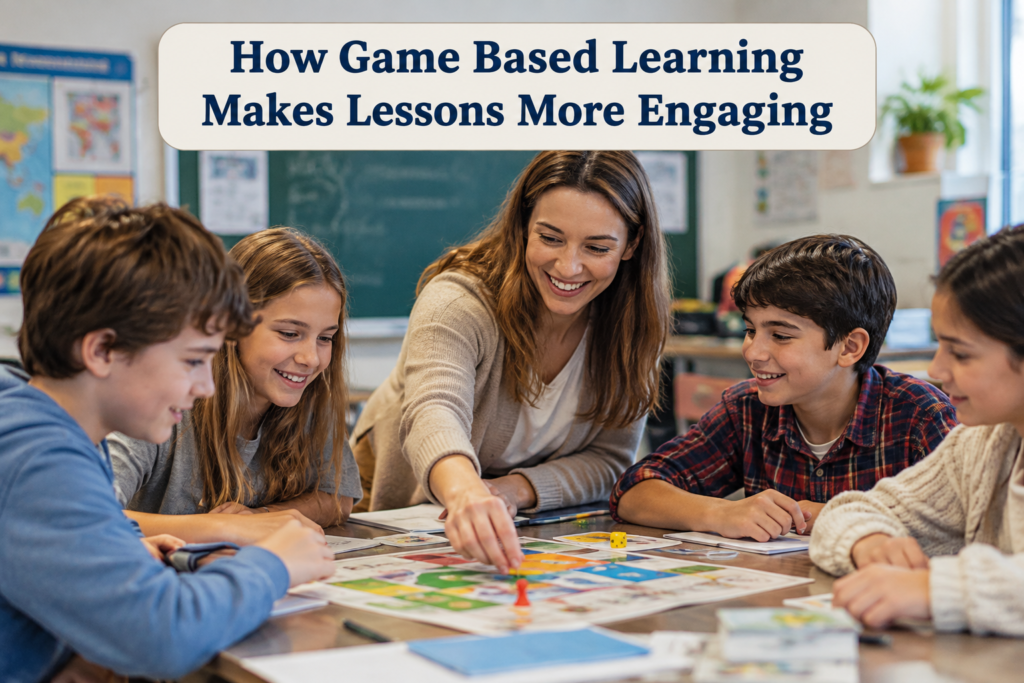
Game based learning brings elements of games into the learning process. Students may solve problems, complete challenges, earn points, move through levels, work in teams, or make decisions while learning academic concepts. The purpose is not simply to entertain students. The main goal is to create an active learning environment where students participate, think, practice, and receive feedback.
After reading about different teaching methods and classroom strategies, I found game based learning especially interesting because it connects learning with curiosity and participation. Students are naturally attracted to challenges, progress, and achievement. When these ideas are used carefully in education, lessons can become more meaningful and enjoyable.
This article explains how game based learning makes lessons more engaging, why it works, what benefits it can provide, and how teachers can use it effectively.
What Is Game Based Learning?
Game based learning is an educational approach in which students learn through games or game like activities.
The game itself is connected with a learning objective. Students are not playing only for entertainment. They are using the activity to understand a concept, practice a skill, solve a problem, or review information.
For example, a mathematics teacher may use a number challenge where students solve problems to move to the next level. A science teacher may use a simulation in which students make decisions about an ecosystem. A language teacher may organize a vocabulary competition or storytelling game.
These activities make students active participants in the lesson.
Traditional lessons often depend heavily on listening, reading, and writing. These methods are still important, but game based learning adds another layer of participation. Students interact with the subject instead of only receiving information.
Why Student Engagement Matters
Student engagement is one of the most important parts of learning.
When students are engaged, they are more likely to pay attention, ask questions, remember information, and complete learning activities. They are also more willing to participate in discussions and practice difficult skills.
On the other hand, students who are not interested in a lesson may become distracted. They may complete work only because they are required to do so.
Game based learning can improve engagement because it gives students a clear reason to participate. They want to solve the next problem, complete the challenge, improve their score, or help their team succeed.
This active involvement can make a lesson feel less like a routine task and more like an experience.
Game Based Learning Creates Active Participation
One of the strongest benefits of game based learning is active participation.
In a normal lecture, students may spend most of the lesson listening. Even when the information is useful, their attention can decrease over time.
Games require students to respond.
They may need to answer a question, choose a strategy, solve a puzzle, or make a decision. This keeps their minds involved in the learning process.
For example, instead of simply reading about historical events, students could participate in a classroom decision game where they examine different choices made during a particular period.
This requires them to think about causes, consequences, and different points of view.
The lesson becomes more interactive because students are doing something with the information.
Games Make Learning Feel More Enjoyable
Enjoyment can influence how students feel about learning.
When lessons are connected with positive experiences, students may become more willing to participate. Game based learning can create this positive atmosphere by adding curiosity, movement, competition, cooperation, and achievement.
Students often enjoy seeing immediate progress.
Completing one challenge and moving to the next creates a sense of accomplishment. Even small achievements can encourage students to continue.
This does not mean that every lesson should become a game. Education still requires concentration, reading, writing, discussion, and serious practice.
However, adding carefully selected game based activities can make difficult or repetitive lessons more interesting.
Immediate Feedback Helps Students Learn
Feedback is an important part of learning.
Students need to know whether they understand a concept correctly. In many traditional activities, feedback may come later after homework or tests are checked.
Game based learning can provide faster feedback.
If a student selects the wrong answer in a learning game, the system or teacher may immediately show that the response was incorrect. The student can then try again or review the concept.
Immediate feedback helps students identify mistakes before those mistakes become habits.
It can also reduce uncertainty.
Instead of wondering whether they understand a topic, students receive information about their progress while they are learning.
Challenges Increase Motivation
Games often include challenges, and challenges can make learning more motivating.
A good challenge should not be too easy or too difficult. If an activity is extremely easy, students may become bored. If it is impossible, they may become frustrated.
Game based learning works best when the difficulty gradually increases.
Students might begin with simple questions and then move toward more complex problems.
This creates a sense of progress.
When students complete a difficult challenge, they often feel satisfied because they can see that their skills are improving.
This feeling of progress can encourage them to continue learning.
Game Based Learning Encourages Problem Solving
Many educational games require students to solve problems.
They may need to identify patterns, compare information, plan a strategy, test an idea, or make a decision.
These activities support critical thinking.
For example, a science game may ask students to design a structure that can survive different environmental conditions. A mathematics game may require students to manage a limited budget. A geography activity may ask students to plan the most efficient travel route.
Students are using academic knowledge in practical situations.
This can help them understand why the information matters.
Learning Through Trial and Error
Mistakes are a normal part of learning.
However, some students are afraid of making mistakes in front of others. They may avoid answering questions because they do not want to give an incorrect response.
Games can create a safer environment for trial and error.
Students expect that they may need several attempts to complete a challenge.
If they fail, they can try again.
This changes the meaning of mistakes. Instead of seeing an incorrect answer as failure, students may see it as information that helps them improve.
This approach can develop persistence.
Students learn that understanding often comes through practice, adjustment, and repeated attempts.
Games Can Improve Memory
Game based learning can also support memory.
Information is often easier to remember when students actively use it.
For example, reading a list of science terms may help students learn them temporarily. Using those terms in a quiz, puzzle, matching game, or classroom challenge may strengthen memory because students repeatedly retrieve the information.
Games can also create memorable experiences.
Students may remember a concept because they connect it with a particular challenge or classroom activity.
The more meaningful the learning experience becomes, the easier it may be to recall the information later.
Game Based Learning Supports Collaboration
Not every educational game needs to be competitive.
Many games can be designed around teamwork.
Students may work together to solve a problem, complete a mission, create a project, or answer questions.
Collaborative games can teach communication and cooperation.
Students learn to share ideas, listen to others, divide responsibilities, and make decisions as a group.
These skills are useful beyond the classroom.
Team based learning activities also allow students to learn from each other. One student may understand a concept that another student finds difficult. During the activity, they can explain ideas and solve problems together.
Healthy Competition Can Increase Interest
Competition can make some classroom activities more exciting.
Students may enjoy trying to improve their score or complete a task faster than another team.
However, competition should be used carefully.
The goal should be learning rather than simply winning.
Teachers can design games where students compete against their previous performance instead of always competing against classmates.
For example, students may try to improve their own quiz score each week.
This type of competition encourages personal progress and reduces unnecessary pressure.
Games Can Make Difficult Subjects Less Intimidating
Some subjects feel difficult to students before the lesson even begins.
Mathematics, science, grammar, and other complex topics can sometimes create anxiety.
Game based learning can make these subjects feel more approachable.
A difficult mathematics problem may feel less intimidating when it is part of a puzzle. A grammar exercise may feel more interesting when students need to correct sentences to unlock the next level.
The academic challenge remains, but the way it is presented changes.
This can help students approach difficult material with more confidence.
Game Based Learning Can Be Used in Different Subjects
One useful feature of game based learning is its flexibility.
It can be used across many subjects.
In mathematics, students can solve number puzzles, budgeting challenges, or logic games.
In science, they can explore simulations, experiments, and environmental decision games.
In language classes, students can use vocabulary games, spelling challenges, storytelling activities, and reading quizzes.
In history, students can participate in timelines, role based activities, and decision making scenarios.
In geography, games can involve maps, countries, climates, or travel planning.
The method changes depending on the subject, but the basic idea remains the same. Students learn by interacting with the content.
Digital Games and Classroom Games
Game based learning does not always require computers.
Digital tools can provide interactive quizzes, simulations, virtual environments, and educational games. These can be very useful when technology is available.
However, teachers can also create effective games using simple classroom materials.
Cards, boards, flashcards, puzzles, question boxes, role play, and team challenges can all support game based learning.
The quality of the learning activity is more important than the technology.
A simple classroom game with a clear educational purpose can sometimes be more effective than a complicated digital activity.
The Difference Between Game Based Learning and Gamification
Game based learning and gamification are related, but they are not exactly the same.
Game based learning uses an actual game or game style activity to teach a concept.
Gamification adds game elements to normal learning activities.
For example, giving students points for completing assignments is gamification.
Using a mathematics game to practice fractions is game based learning.
Both approaches can increase engagement, but teachers should understand the difference so they can choose the right method for each lesson.
The Teacher Still Has an Important Role
Game based learning does not replace teachers.
The teacher remains responsible for planning the lesson, explaining concepts, observing students, providing support, and checking whether learning goals are being achieved.
Games should support teaching, not control it.
Before using a game, teachers should ask several questions.
What should students learn from this activity?
Does the game support the lesson objective?
Will students understand the connection between the game and the subject?
How will learning be measured?
These questions help ensure that the activity remains educational.
Avoiding Too Much Focus on Rewards
Points, badges, and prizes can make games exciting, but they should not become the main reason students learn.
If students focus only on rewards, they may ignore the deeper purpose of the activity.
Teachers can reduce this problem by emphasizing progress, understanding, curiosity, and improvement.
For example, instead of rewarding only the student with the highest score, teachers can recognize teamwork, creative thinking, improvement, and effort.
This keeps the focus on learning.
Game Based Learning and Different Learning Styles
Students do not all learn in the same way.
Some prefer reading. Others learn better through discussion, practice, visuals, movement, or problem solving.
Game based learning can include several types of learning at the same time.
A game may include reading instructions, discussing ideas, watching visual information, solving problems, and physically moving around the classroom.
This variety can help more students participate.
However, teachers should still provide different learning options because no single method works perfectly for everyone.
How Teachers Can Use Game Based Learning Effectively
Successful game based learning requires planning.
The first step is choosing a clear learning objective.
The game should directly support that objective.
The rules should also be simple enough for students to understand quickly. If students spend most of the lesson trying to understand complicated rules, the learning benefit may decrease.
Teachers should also manage time carefully.
Short games can be useful for reviewing a topic, introducing a concept, or checking understanding.
Longer activities may be appropriate for projects, simulations, or problem solving tasks.
After the game, discussion is important.
Teachers can ask students what they learned, what strategies they used, and what mistakes they made.
This reflection helps connect the game experience with the academic lesson.
Possible Challenges of Game Based Learning
Game based learning has many benefits, but it also has challenges.
Some students may become too focused on competition.
Others may pay more attention to the game than the learning objective.
Technology based games can also create problems if devices or internet access are limited.
Teachers may need extra preparation time to select or design suitable activities.
For this reason, game based learning should be used thoughtfully.
It works best as one part of a balanced teaching approach.
The Future of Game Based Learning
Game based learning is likely to become more common as digital education continues to develop.
Virtual simulations, educational apps, adaptive learning systems, and interactive classroom tools are creating new ways for students to learn through experience.
Artificial intelligence may also make educational games more personalized.
A learning system could adjust the difficulty of questions based on student performance. Students who need additional practice could receive easier challenges, while advanced learners could move toward more complex activities.
However, technology should remain connected with good teaching principles.
The goal is not to use technology simply because it is new. The goal is to improve learning.
Final Thoughts
Game based learning makes lessons more engaging by transforming students from passive listeners into active participants.
Through challenges, problem solving, teamwork, feedback, and progress, students become more involved in the learning process. Games can make difficult subjects feel more approachable and provide students with opportunities to practice skills in meaningful situations.
The strongest game based learning activities are not simply entertaining. They are carefully connected with educational goals.
Teachers still need to explain ideas, guide students, observe progress, and encourage reflection. Games work best when they support these teaching methods rather than replace them.
From what I have learned about this approach, the most valuable part of game based learning is its ability to make students curious about what happens next. That curiosity can encourage them to participate, practice, and continue learning.
When education creates this type of interest, lessons can become more memorable and meaningful.
Frequently Asked Questions
What is game based learning?
Game based learning is a teaching method that uses games or game style activities to help students understand concepts, practice skills, and solve problems.
Why does game based learning increase student engagement?
It increases engagement because students actively participate in challenges, receive feedback, make decisions, and see their progress during the lesson.
Can game based learning be used without technology?
Yes. Teachers can use board games, cards, quizzes, puzzles, role play, classroom competitions, and team challenges without using digital devices.
Is game based learning suitable for all subjects?
It can be used in many subjects, including mathematics, science, language learning, history, geography, and social studies.
What is the difference between game based learning and gamification?
Game based learning uses a game to teach a concept, while gamification adds game features such as points, levels, or rewards to normal learning activities.
Can educational games improve memory?
They can support memory by encouraging students to retrieve information, repeat important concepts, and connect knowledge with memorable experiences.
Should every lesson use games?
No. Game based learning works best when combined with other teaching methods such as reading, discussion, writing, explanation, projects, and independent practice.