The world is changing faster than ever before. Technology is developing, new careers are appearing, and the way people work is becoming different every year. Because of these changes, students need more than good grades to prepare for a successful future. They need practical skills that can help them solve problems, communicate with others, use technology, and adapt to new situations. Learning the best skills for students can make it easier to succeed in education, work, and everyday life.
Students who start developing useful skills at an early age can become more confident and prepared for future challenges. Some skills are connected to technology, while others are related to communication, creativity, decision making, and personal development. In this article, we will discuss the best skills students should learn for the future and explain why these skills are important.
1. Communication Skills
Communication is one of the most important skills students should learn for the future. Students need to communicate clearly with teachers, classmates, employers, customers, and other people throughout their lives.
Good communication includes speaking clearly, listening carefully, writing properly, and understanding other people’s ideas. Students who can express their thoughts confidently often perform better in school and have an advantage in their future careers.
Students can improve communication skills by reading books, participating in discussions, giving presentations, and practicing writing. Listening is also an important part of communication because effective communication is not only about speaking. It is also about understanding others.
2. Critical Thinking
Critical thinking helps students analyze information and make better decisions. Today, people have access to huge amounts of information through websites, social media, videos, and other digital platforms. Not everything they see online is accurate.
Students should learn how to ask questions, examine evidence, compare different ideas, and identify reliable information. Critical thinking can help them avoid false information and make decisions based on facts rather than assumptions.
This skill is useful in education, business, technology, and everyday life. A student who develops strong critical thinking skills can approach difficult problems with a clear and logical mind.
3. Problem Solving Skills
Every career requires people to solve problems. Students may face difficult assignments, group challenges, personal decisions, or unexpected situations. Learning how to solve problems can prepare them for these challenges.
Problem solving involves identifying the main issue, understanding its causes, thinking about possible solutions, and choosing the best option. Students can develop this skill through puzzles, practical activities, projects, games, and real life situations.
The ability to solve problems independently can also make students more confident. Instead of becoming frustrated when something goes wrong, they can learn to look for practical solutions.
4. Digital Literacy
Technology has become an important part of education and employment. Digital literacy is therefore one of the best skills students should learn for the future.
Digital literacy means knowing how to use computers, smartphones, online platforms, software, and digital communication tools effectively. Students should also understand basic online safety and responsible internet use.
They can learn how to create documents, use spreadsheets, conduct online research, make presentations, communicate through digital platforms, and organize digital information. These skills can be useful in almost every modern career.
5. Basic Artificial Intelligence Skills
Artificial intelligence is becoming increasingly important in education, business, science, and many other industries. Students do not necessarily need to become AI experts, but understanding basic AI concepts can give them an advantage.
Students should learn how AI works at a basic level, how to use AI tools responsibly, and how to check information produced by AI. They should understand that technology can support human work but does not always provide perfect answers.
Learning about artificial intelligence can help students become comfortable with future technologies and prepare for careers that may depend on AI.
6. Creativity
Creativity is another important skill for students. Many people think creativity is only useful for artists, writers, or designers, but it is valuable in almost every profession.
Creative thinking helps people develop new ideas, find different solutions, and approach challenges from new perspectives. Businesses need creative employees who can think about better products, services, and ways of working.
Students can develop creativity by drawing, writing, designing projects, experimenting with ideas, making videos, solving open ended problems, and trying new activities. They should not be afraid of making mistakes because mistakes can often lead to new ideas.
7. Time Management
Time management is an essential skill for students because they often have many responsibilities. They may need to balance schoolwork, homework, exams, family activities, hobbies, and personal time.
Students who manage their time effectively can complete important tasks without unnecessary stress. They can learn to create schedules, set priorities, divide large tasks into smaller activities, and avoid wasting time.
Good time management also becomes extremely useful in professional life. Employees who know how to manage deadlines and responsibilities are often more productive and reliable.
8. Teamwork
Most modern workplaces require people to work with others. For this reason, teamwork should be included among the best skills students should learn for the future.
Teamwork teaches students how to share responsibilities, respect different opinions, communicate with group members, and work toward a common goal. Students can develop teamwork skills through group projects, sports, classroom activities, and community programs.
Learning how to cooperate with different personalities can prepare students for professional environments where collaboration is often necessary.
9. Emotional Intelligence
Emotional intelligence means understanding and managing emotions while also recognizing the feelings of other people. This skill can help students build stronger relationships and handle difficult situations.
Students with good emotional intelligence can manage frustration, respond calmly to criticism, understand other people’s perspectives, and communicate more effectively.
Emotional intelligence can be developed through self reflection, active listening, empathy, and healthy communication. It can also help students become better leaders and team members.
10. Financial Literacy
Financial literacy is an important life skill that many students need to learn before entering adulthood. Understanding money can help students make responsible financial decisions.
Students should learn basic concepts such as budgeting, saving, spending, income, expenses, and responsible borrowing. They should understand the difference between needs and wants and learn why saving money is important.
Financial literacy can help young people become more independent and avoid common financial mistakes in the future.
11. Adaptability
The future will continue to bring changes in technology, careers, education, and society. Students therefore need to learn how to adapt to new situations.
Adaptability means being willing to learn new things and adjust when circumstances change. A career that exists today may look completely different in the future. Some jobs may disappear while new careers are created.
Students who are adaptable can continue learning instead of being afraid of change. They can develop this skill by trying new activities, learning new subjects, accepting challenges, and staying open to different ideas.
12. Leadership Skills
Leadership is not only important for managers and business owners. Students can benefit from leadership skills in school, college, and their future careers.
Leadership involves taking responsibility, making decisions, supporting others, communicating clearly, and working toward goals. Students can develop leadership skills by taking part in school projects, clubs, sports teams, volunteer activities, and community programs.
Good leadership is not about controlling other people. It is about helping a group move toward a shared goal while respecting everyone involved.
13. Research Skills
Students will need to find and understand information throughout their lives. Research skills can help them locate reliable information and use it effectively.
Students should learn how to search for information, compare sources, identify trustworthy websites, take useful notes, and organize information. These skills are particularly important for academic assignments and future professional work.
Strong research skills also support critical thinking because students learn to evaluate information instead of accepting every statement they read.
14. Self Learning Skills
The ability to learn independently may become one of the most valuable skills for students in the future. Education does not end after school or university. People often need to learn new skills throughout their careers.
Students can develop self learning skills by reading regularly, taking online courses, watching educational lessons, practicing independently, and setting personal learning goals.
A student who enjoys learning independently can continue improving even when there is no teacher available to guide every step.
15. Confidence and Self Discipline
Confidence and self discipline can help students turn their knowledge into action. Confidence allows students to express ideas and take on challenges, while self discipline helps them continue working even when motivation is low.
Students can build confidence by setting small goals and celebrating progress. They can develop self discipline by following routines, completing tasks on time, limiting distractions, and staying committed to important goals.
Conclusion
The future will create many new opportunities, but students need the right skills to take advantage of them. Academic knowledge is important, but it becomes even more valuable when students combine it with practical abilities.
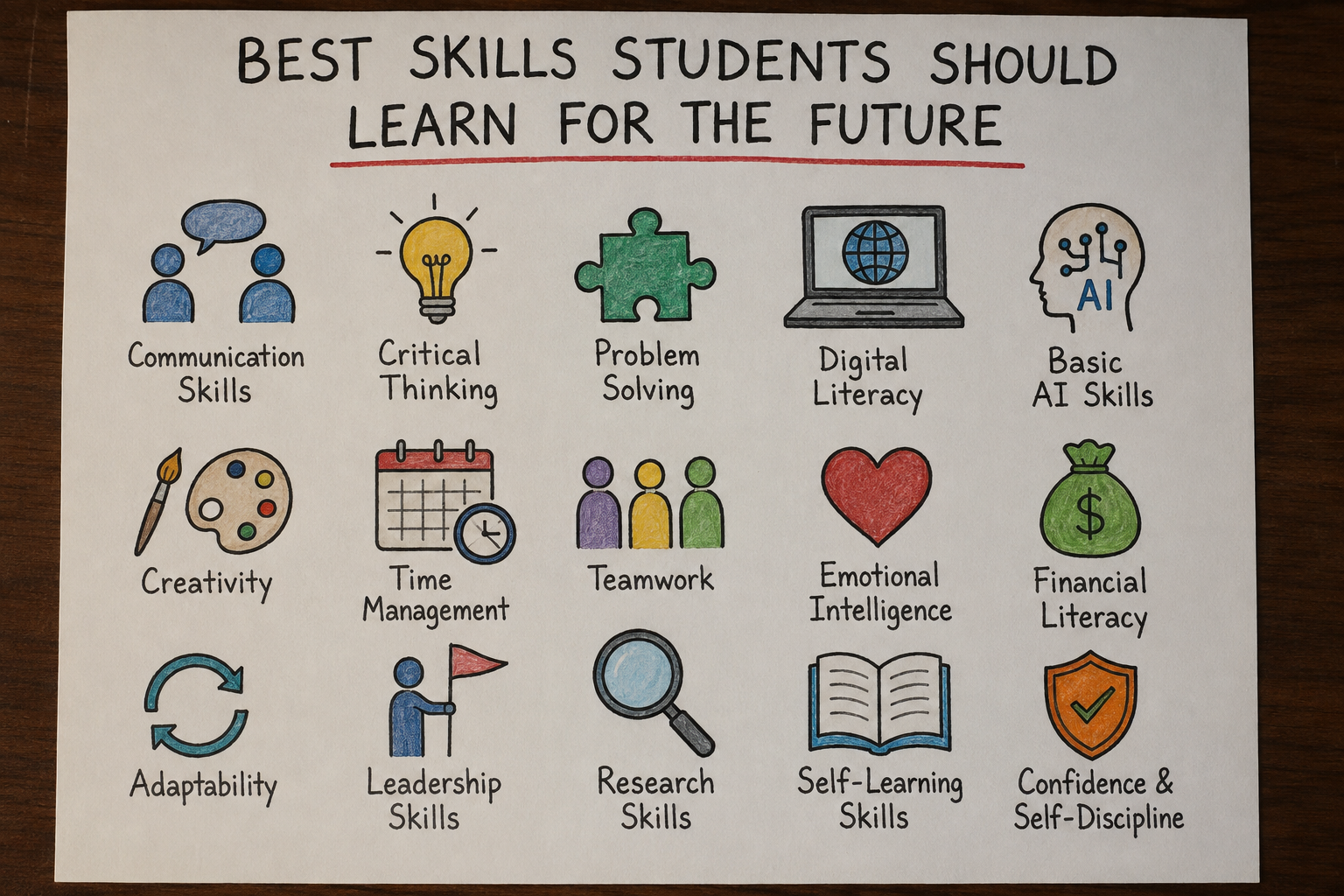
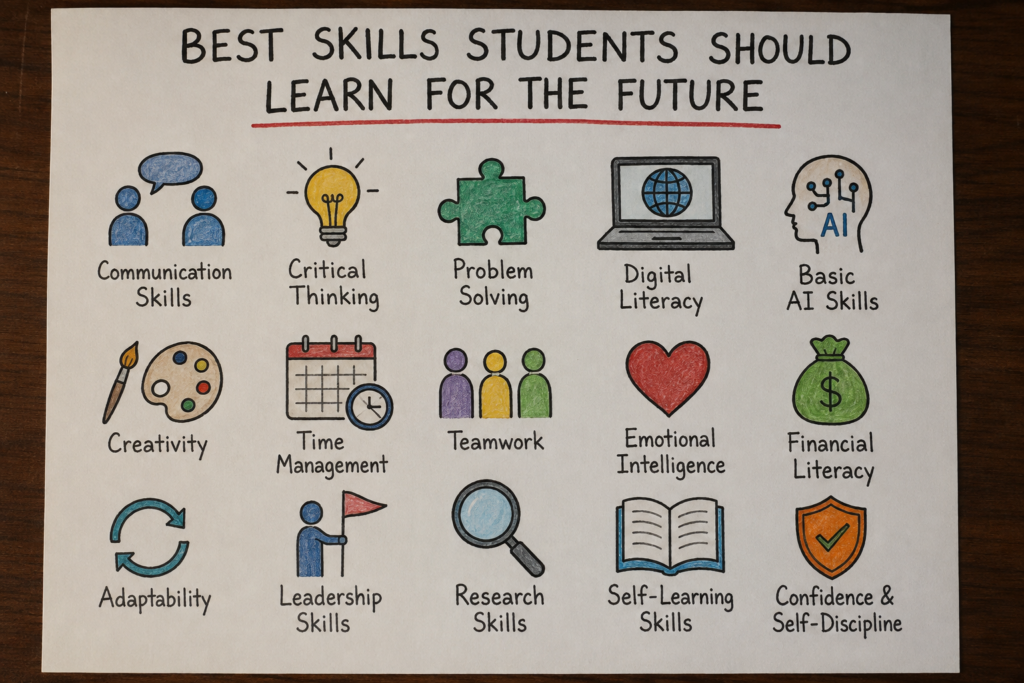
Communication, critical thinking, problem solving, digital literacy, artificial intelligence awareness, creativity, time management, teamwork, emotional intelligence, financial literacy, adaptability, leadership, research, self learning, confidence, and self discipline are some of the best skills students should learn for the future.
Students do not need to master every skill at once. The best approach is to choose a few skills, practice them regularly, and gradually add new ones. By developing these abilities early, students can become more confident, independent, and prepared for future education and career opportunities.
The future belongs to people who are willing to learn, adapt, and improve. When students focus on developing both knowledge and practical skills, they can build a strong foundation for long term success.