
Concentration is one of the most important skills for students who want to achieve better results in their studies. Many students sit with their books for hours but still feel that they have not learned enough. The main reason is often a lack of concentration. When your mind keeps moving from one thought to another, studying becomes difficult and time is wasted.
Learning how to improve concentration while studying can help you understand lessons faster, remember information for longer, and complete your academic work with less stress. Good concentration does not always come naturally. It is a skill that can be developed through simple daily habits and the right study environment.
Choose a Quiet Study Environment
Your study environment has a strong effect on your concentration. If you study in a noisy place, you may find it difficult to focus on your books. Television, loud conversations, mobile phones, and other distractions can quickly take your attention away from your studies.
Try to choose a quiet and comfortable place for studying. Your desk should be clean and organized so that you can easily find your books, notebooks, and other study materials. A peaceful environment helps your brain understand that it is time to focus.
You do not need an expensive study room. Even a small corner of your home can become a good study space if it is clean, comfortable, and free from unnecessary distractions.
Keep Your Mobile Phone Away
Mobile phones are one of the biggest distractions for students. Social media notifications, messages, videos, and games can interrupt your study session again and again. Even checking your phone for a few minutes can make it harder to return to the same level of concentration.
When you start studying, put your phone on silent mode and keep it away from your desk. If possible, place it in another room. You can check your phone during your planned break.
Reducing phone use while studying is one of the easiest ways to improve concentration and increase study productivity.
Set Clear Study Goals
Studying without a clear goal can make you feel confused and tired. Before starting your study session, decide exactly what you want to complete.
For example, instead of saying that you will study mathematics, set a specific goal such as completing ten questions or understanding one chapter. A clear goal gives your mind a direction and makes the study session easier to manage.
Small and realistic goals can also increase motivation. When you complete one goal, you feel a sense of achievement, which encourages you to continue studying.
Use Short Study Sessions
Studying continuously for several hours may not always produce good results. Your concentration naturally decreases when your brain becomes tired. For this reason, short and focused study sessions can be more effective.
You can study for about twenty five to fifty minutes and then take a short break. During the break, stand up, walk around, drink water, or relax your eyes. After the break, return to your studies with a fresh mind.
This method can help you avoid mental tiredness and maintain concentration for a longer period.
Take Regular Breaks
Breaks are an important part of effective studying. Some students believe that studying without breaks means they are working harder, but this can actually reduce concentration.
A short break gives your brain time to relax. It can also prevent boredom and mental exhaustion. However, your breaks should be controlled. Watching long videos or spending too much time on social media can make it difficult to return to studying.
Use your breaks for simple activities that refresh your mind without taking too much time.
Get Enough Sleep
Sleep plays an important role in concentration, memory, and learning. Students who do not get enough sleep may feel tired during the day and find it difficult to understand lessons.
Try to maintain a regular sleeping schedule and get enough rest at night. Avoid staying awake for very late hours just to complete your studies. A tired brain cannot concentrate effectively.
Good sleep helps your mind process and remember the information you studied during the day.
Eat Healthy Foods
Your brain needs energy to work properly. A healthy diet can support concentration and mental performance. Include nutritious foods such as fruits, vegetables, eggs, whole grains, nuts, and other balanced food choices in your daily meals.
Avoid eating too much heavy or sugary food before studying because it may make you feel tired or sleepy.
Drinking enough water is also important. Dehydration can make you feel tired and uncomfortable, which can affect your ability to focus.
Stay Physically Active
Physical activity can support both physical and mental health. Regular exercise may help you feel more energetic and reduce stress. You do not need to spend hours at the gym. Walking, stretching, cycling, or simple home exercises can be useful.
Even a short walk before studying can help you feel refreshed. Making physical activity part of your daily routine can support better concentration while studying.
Avoid Multitasking
Many students try to study while watching videos, chatting with friends, listening to notifications, or using social media. This may feel productive, but multitasking often reduces focus.
Try to give your full attention to one task at a time. If you are reading a chapter, focus on reading. If you are solving questions, focus on solving them.
Single tasking allows your brain to concentrate deeply and can help you finish your work more efficiently.

Use Active Learning Techniques
Reading the same information again and again may not always keep your mind engaged. Active learning techniques can make studying more interesting and improve concentration.
Try explaining a topic in your own words, making short notes, asking yourself questions, creating flashcards, or solving practice questions. Teaching a topic to someone else is another useful method because it requires you to understand the information instead of simply reading it.
Active learning keeps your brain involved and can make study sessions more effective.
Study Difficult Subjects When You Are Most Alert
Everyone has a time of day when they feel more active and focused. Some students concentrate better in the morning, while others prefer studying in the afternoon or evening.
Pay attention to your energy levels and identify the time when you can focus best. Use that time for difficult subjects or important assignments.
When your mind is fresh, challenging topics may become easier to understand.
Manage Stress and Anxiety
Stress can make concentration difficult. When you are worried about exams, assignments, or personal problems, your mind may continue thinking about those issues while you are trying to study.
Before starting your study session, take a few minutes to relax. Deep breathing, light stretching, prayer, meditation, or a short walk may help you calm your mind.
Do not try to complete everything at once. Make a realistic study plan and divide large tasks into smaller parts. Managing your workload can reduce stress and improve concentration.
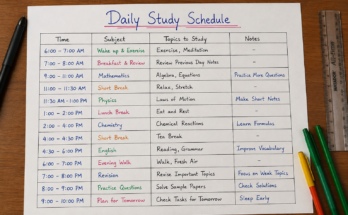
Make a Simple Study Schedule
A study schedule can help you organize your time and avoid last minute pressure. Write down the subjects you need to study and decide when you will work on each one.
Include short breaks and enough time for sleep, meals, exercise, and relaxation. A realistic schedule is better than a schedule that is too difficult to follow.
Try to study at similar times each day. Over time, this routine can make it easier for your mind to enter study mode.
Keep Your Study Desk Organized
A messy desk can create unnecessary distractions. When books, papers, stationery, and other items are scattered everywhere, you may spend time looking for things instead of studying.
Before starting your session, keep only the materials you need on your desk. Put unnecessary items away. A clean study area can create a more comfortable environment and help you stay focused.
Avoid Studying When You Are Extremely Tired
Sometimes the best way to improve concentration is to recognize when you need rest. If you are extremely tired, forcing yourself to study may not be productive.
Take some time to rest and then return to your studies with better energy. However, avoid using tiredness as an excuse every day. Building a consistent routine helps you balance study and rest.
Practice Concentration Every Day
Improving concentration does not happen overnight. It requires regular practice. Start with short periods of focused studying and gradually increase the amount of time you can concentrate.
At first, you may find it difficult to study without checking your phone or thinking about other things. With practice, your ability to focus can become stronger.
The key is consistency. Small improvements every day can lead to better concentration over time.
Conclusion
Learning how to improve concentration while studying can make a major difference in academic performance. A quiet study environment, limited phone use, clear goals, regular breaks, enough sleep, healthy food, physical activity, and active learning can all support better focus.
The most important thing is to create habits that you can follow consistently. You do not need to change everything in one day. Start with one or two simple habits and gradually build a better study routine.
When you learn to control distractions and give your full attention to your studies, you can understand lessons more easily, remember information better, and use your study time more effectively. Good concentration is not only useful for exams. It is a valuable skill that can help students become more organized, confident, and successful in their education and future careers.