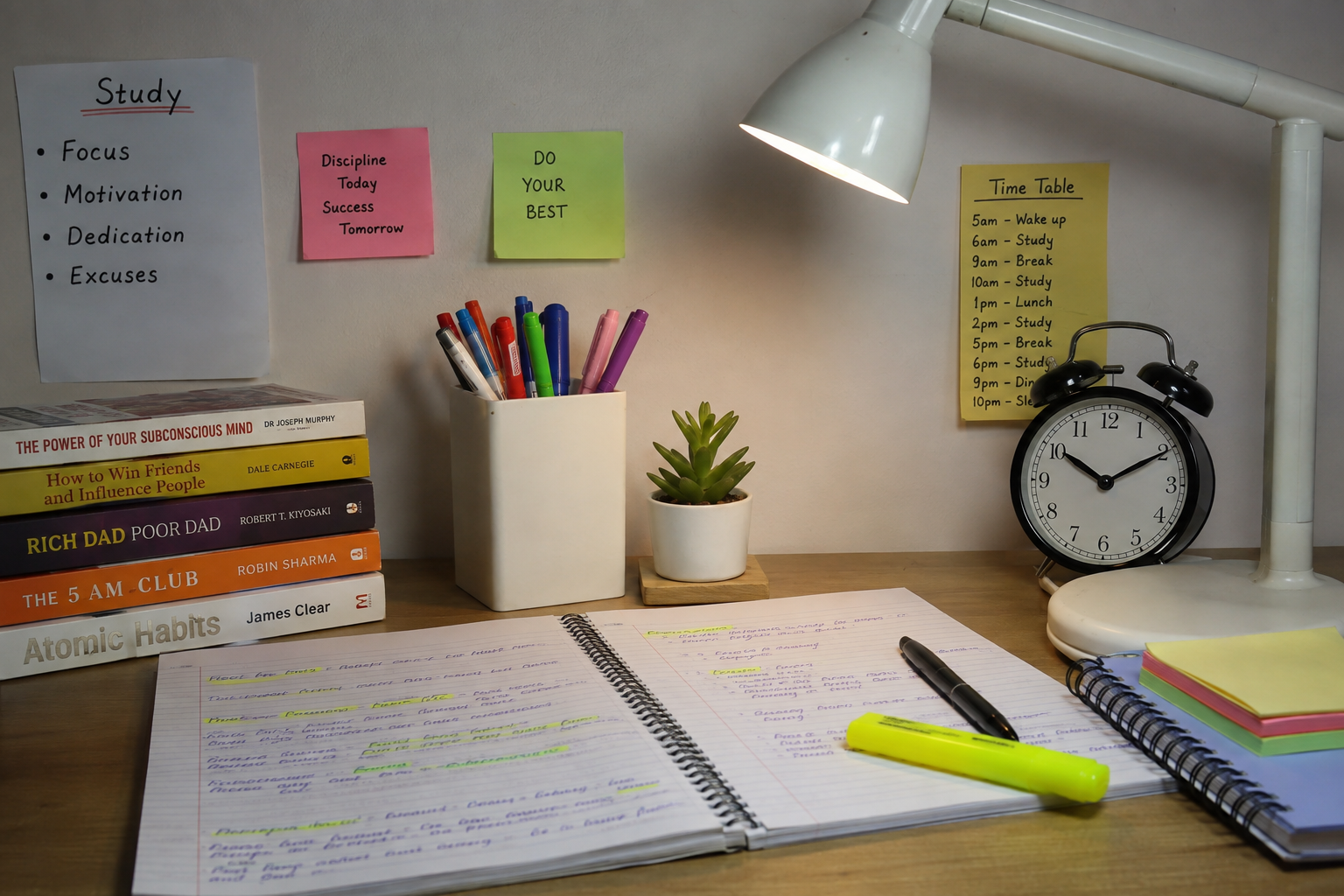
Studying is an important part of every student’s academic life. However, spending many hours with books does not always guarantee better results. The way a student studies can make a big difference in learning, memory, concentration, and exam performance. Using the best study techniques for students can help make study time more productive and less stressful.
Every student has a different learning style and academic goal. Some students understand topics quickly, while others need more practice and revision. The good news is that effective study techniques can be learned and improved with regular practice. From active recall to creating a study schedule, simple changes in your study habits can lead to better results.
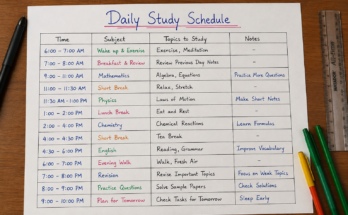
Create a Proper Study Schedule
One of the best study techniques for students is creating a realistic study schedule. A study schedule helps students organize their time and avoid last minute preparation. Instead of trying to study everything in one day, divide your subjects into smaller study sessions.
Start by identifying your important subjects, upcoming tests, assignments, and personal responsibilities. Then decide how much time you can give to studying each day. Make sure your schedule includes short breaks because studying continuously for several hours can reduce concentration.
A good study schedule should be flexible. If you miss a study session, do not become discouraged. Adjust your plan and continue from where you stopped.
Use Active Recall
Active recall is one of the most effective study techniques for improving memory. Instead of reading the same information again and again, try to remember the information without looking at your notes.
For example, after reading a chapter, close your book and ask yourself what you remember. You can write down important points or explain the topic in your own words. You can also create questions from your textbook and answer them without checking the answers first.
Active recall forces your brain to retrieve information. This makes it easier to remember the material later, especially during exams.
Practice Spaced Repetition
Spaced repetition is another powerful method for students. It means reviewing information several times over a period of days or weeks instead of studying everything at once.
For example, if you learn a new topic today, review it tomorrow. Review it again after several days and then once more after a week. This approach helps move information into long term memory.
Spaced repetition works especially well for vocabulary, formulas, definitions, dates, scientific concepts, and other information that requires memorization.
Take Useful Notes
Good note taking can make studying much easier. However, taking notes does not mean writing every word the teacher says. Focus on important ideas, explanations, examples, formulas, and key terms.
Try to write information in your own words. This helps you understand the topic instead of simply copying information. You can use headings, short paragraphs, numbered points, and simple diagrams to organize your notes.
After class, spend a few minutes reviewing your notes. Correct anything that is unclear while the lesson is still fresh in your mind.
Study in Short Sessions
Studying for a long time without a break can make you tired and reduce your ability to concentrate. One useful approach is to divide study time into short focused sessions.
For example, you can study for around twenty five to fifty minutes and then take a short break. During the study period, focus completely on your work. During the break, move around, drink water, or relax for a few minutes.
Short study sessions can help maintain concentration and make difficult subjects feel easier to manage.
Practice With Questions
One of the best ways to prepare for exams is to practice questions. Reading a textbook can help you understand information, but answering questions shows whether you can actually use what you have learned.
Use previous exam questions, textbook exercises, quizzes, and practice tests whenever possible. Try to answer questions without looking at your notes.
After completing a practice test, check your mistakes carefully. Do not simply look at the correct answer. Understand why your answer was incorrect and review the topic again.
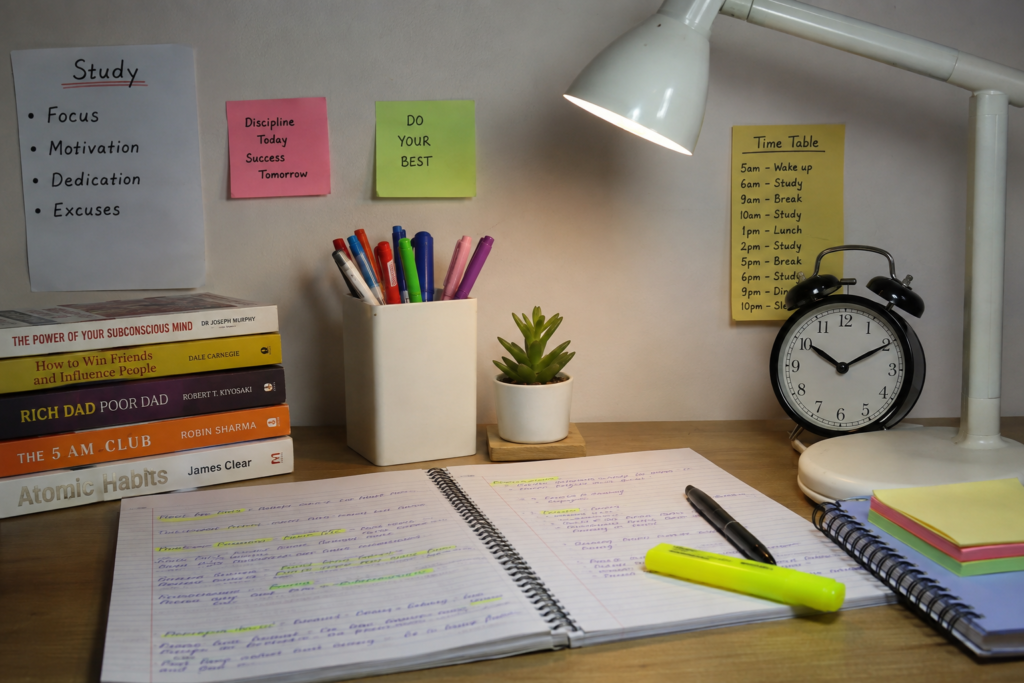
Explain Topics in Your Own Words
Teaching a topic to someone else is an excellent way to test your understanding. You do not necessarily need another person. You can explain the topic to yourself as if you are teaching a class.
Choose a subject and explain its main idea using simple language. If you cannot explain something clearly, it may mean that you do not fully understand it yet.
This technique is particularly useful for complicated subjects because it encourages deeper understanding rather than simple memorization.
Avoid Distractions While Studying
Distractions can waste a large amount of study time. Mobile phones, social media, television, games, and unnecessary internet browsing can make it difficult to concentrate.
Before starting a study session, remove unnecessary distractions. Put your phone away or turn off notifications if possible. Keep your study area clean and organized.
A quiet and comfortable study environment can help you stay focused. If complete silence is not possible, choose a place where interruptions are limited.
Use Different Learning Methods
Students can improve their understanding by using different learning methods. Reading, writing, speaking, drawing, and practicing can all support learning.
For example, you can read a chapter, create a short summary, draw a simple diagram, and then answer practice questions. Using multiple methods can make learning more interesting and help you understand information from different perspectives.
Visual learners may benefit from charts and diagrams, while students who learn through practice may benefit from exercises and examples. Try different methods and discover which ones work best for you.
Take Regular Breaks
Breaks are an important part of effective studying. Many students believe that studying continuously is the best way to get better results, but excessive study without rest can lead to tiredness and poor concentration.
Take short breaks between study sessions. During a break, avoid activities that make it difficult to return to studying. A short walk, stretching, drinking water, or simply resting your eyes can help refresh your mind.
Longer breaks can also be useful after completing several study sessions.
Get Enough Sleep
Sleep plays an important role in learning and memory. Students who regularly sacrifice sleep for studying may find it harder to concentrate and remember information.
Try to maintain a consistent sleep routine, especially before important exams. A well rested mind can process information more effectively.
Instead of staying awake all night before an exam, prepare your material earlier and get enough rest. Good sleep combined with effective study techniques can improve your overall academic performance.
Review Your Mistakes
Mistakes are an important part of learning. When you make an error in homework, practice questions, or an exam, take time to understand what went wrong.
Create a list of topics or questions that you find difficult. Review these areas more often than topics you already understand well.
This approach helps you focus your study time where it is most needed. Over time, your weak areas can become strengths.
Stay Consistent
Consistency is more important than studying for extremely long hours occasionally. Studying a little every day can be more effective than waiting until the night before an exam.
Set small daily goals and try to complete them. Even thirty minutes of focused study can be valuable when done consistently.
Do not compare your progress with other students. Everyone learns at a different speed. Focus on improving your own study habits and understanding.
Conclusion
The best study techniques for students are simple but require regular practice. Creating a study schedule, using active recall, practicing spaced repetition, taking useful notes, answering questions, avoiding distractions, and getting enough sleep can make studying more effective.
Students should also remember that successful studying is not about spending the maximum number of hours with a book. It is about using study time wisely and understanding the material deeply.
Try different study methods and find the techniques that work best for you. With consistency, focus, proper planning, and effective study habits, students can improve their memory, confidence, academic performance, and exam results.