Studying effectively is one of the most important skills for students who want better academic results. Many students spend several hours with their books but still struggle to remember what they have learned. The problem is often not a lack of effort. It is usually the study method, environment, time management, and level of concentration.
Learning how to study effectively can help you understand difficult subjects, remember information for longer, reduce exam stress, and improve your overall academic performance. Effective studying does not mean studying all day. It means using your time wisely and choosing study techniques that make learning easier and more productive.
Set Clear Study Goals
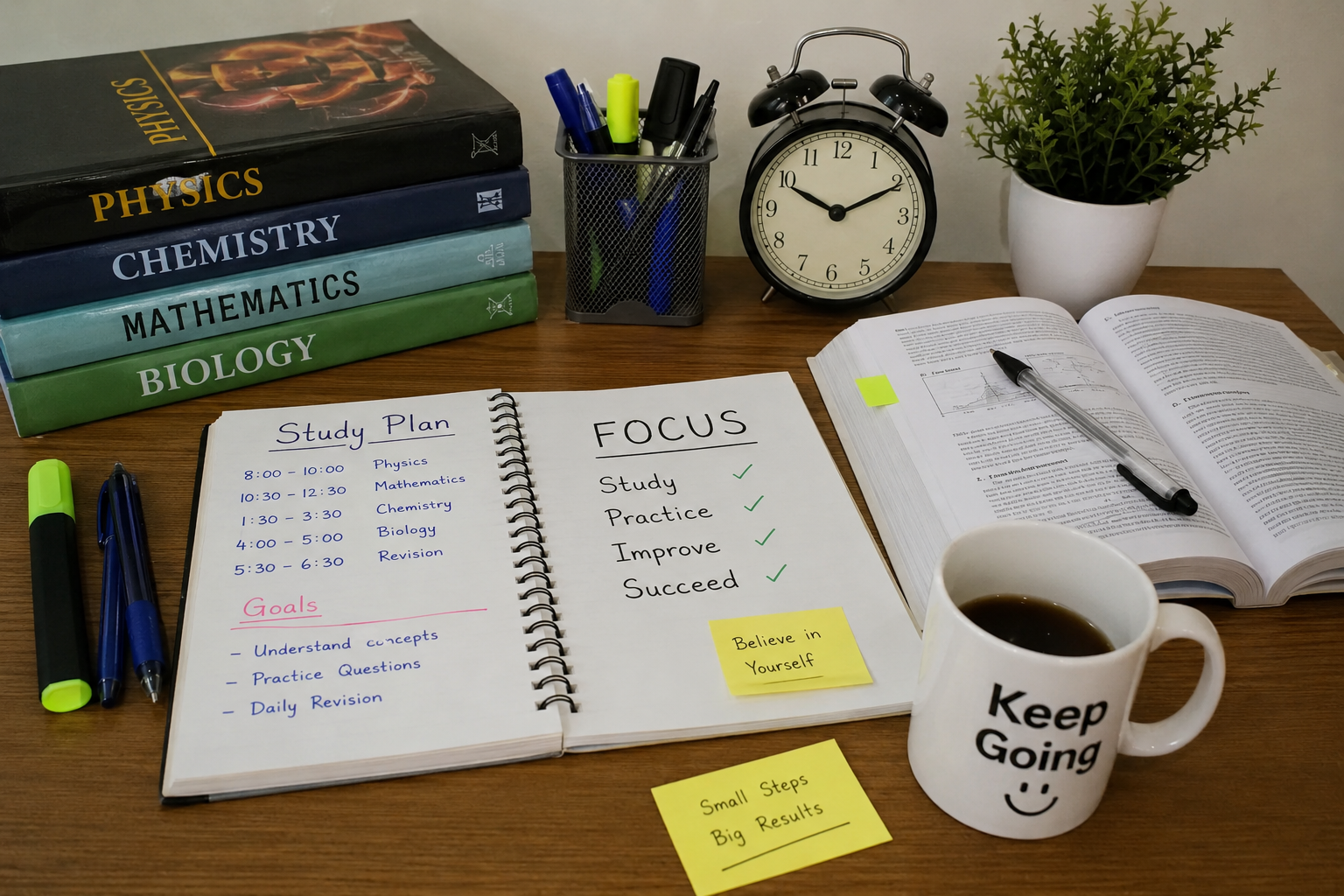
Before starting your study session, decide exactly what you want to accomplish. A clear goal gives your study time direction and helps you stay focused.
Instead of saying that you will study mathematics for two hours, set a specific target such as completing a particular chapter, solving twenty problems, or reviewing a certain topic. Specific goals make it easier to measure your progress.
You can create daily, weekly, and monthly study goals. Keep your goals realistic so you do not become discouraged. Completing small goals regularly can lead to significant improvement over time.
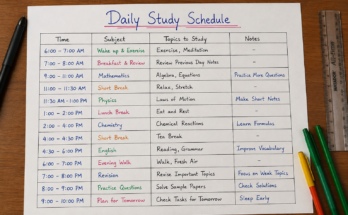
Create a Study Schedule
Good time management is essential for effective studying. A study schedule helps you organize your academic responsibilities and prevents you from leaving everything until the last minute.
Choose specific times for studying each subject. Try to study at a time when your mind feels active and alert. Some students learn better in the morning, while others prefer studying in the evening.
Include short breaks in your schedule. Studying continuously for many hours can make you tired and reduce concentration. A short break can help refresh your mind before you return to your work.
A consistent study routine can also make studying feel more natural. When you follow a regular schedule, you are less likely to waste time deciding when to begin.
Choose the Right Study Environment
Your study environment can have a major effect on your concentration. A quiet, clean, and comfortable place can make learning much easier.
Keep your study area organized and remove unnecessary items from your desk. Put your books, notebooks, pens, and other study materials within easy reach.
Try to avoid distractions such as television, social media, unnecessary phone notifications, and loud conversations. If your phone is not needed for studying, consider keeping it away from your desk.
Good lighting and comfortable seating are also important. Your study area should allow you to sit comfortably without making you feel sleepy.
Use Active Learning Techniques
One of the best ways to study effectively is to become actively involved in the learning process. Simply reading the same pages again and again may not help you remember information.
Active learning means asking questions, explaining concepts, solving problems, making notes, and testing yourself.
After reading a topic, close your book and try to explain what you learned in your own words. If you cannot explain it clearly, review the topic again.
You can also create questions from your study material and answer them without looking at your notes. This technique helps you identify areas that need more attention.
Take Useful Notes
Taking good notes can improve both understanding and memory. However, effective note taking does not mean writing every word from a lecture or textbook.
Focus on important ideas, definitions, examples, formulas, and key facts. Use simple language that you understand.
You can organize your notes with headings, short points, diagrams, and examples. Well organized notes make revision easier before tests and examinations.
After class, spend a few minutes reviewing your notes. This small habit can help strengthen your understanding before you move on to new topics.
Practice Active Recall
Active recall is a powerful study technique that involves remembering information without looking at the answer.
For example, after studying a chapter, close your book and write down everything you can remember. You can also use flashcards to test yourself on important definitions, facts, formulas, and concepts.
The more you practice recalling information, the easier it can become to remember it during an examination.
Active recall is especially useful when preparing for subjects that require you to remember large amounts of information.
Use Spaced Repetition
Spaced repetition means reviewing information at increasing intervals instead of trying to learn everything in one session.
For example, you might review a topic on the day you learn it, then review it again after two days, one week later, and again before the examination.
This approach helps reduce forgetting and gives your brain repeated opportunities to strengthen memory.
Students often make the mistake of studying a topic once and assuming they will remember it permanently. Regular revision is much more effective for long term learning.
Practice With Questions
Practice questions are extremely useful for improving academic performance. They help you understand how information is applied and show you which areas need improvement.
For mathematics and science subjects, solve different types of problems instead of only reading examples. For language subjects, practice writing answers, essays, and comprehension exercises.
Past papers and sample questions can also help you understand the format and difficulty of examinations. After completing practice questions, check your answers carefully and learn from your mistakes.
Do not feel discouraged when you make mistakes. Mistakes can show you exactly what you need to improve.
Avoid Multitasking
Multitasking may seem like a good way to save time, but it can reduce the quality of your learning. Switching between studying, messaging, watching videos, and checking social media can interrupt your concentration.
Try to focus on one academic task at a time. Give the subject your full attention for a planned period and then take a short break.
If you need your phone for educational purposes, turn off unnecessary notifications so you are not constantly interrupted.
Focused study sessions are often more productive than long sessions filled with distractions.
Take Regular Breaks
Breaks are an important part of effective studying. Your brain needs time to rest and recover after concentrating for a period of time.
You can study for a focused period and then take a short break. During your break, stand up, walk around, drink water, or simply relax for a few minutes.
Avoid spending your entire break scrolling through social media because this can make it harder to return to your studies.
The purpose of a break is to refresh your mind and prepare yourself for the next study session.
Get Enough Sleep
Sleep plays an important role in learning and memory. Students who regularly stay awake late at night to study may feel tired and find it harder to concentrate the next day.
Instead of depending on last minute study sessions, try to prepare early and maintain a healthy sleep routine.
Getting enough rest can help you stay focused, process information, and perform better during examinations. A good study plan should include both productive study time and adequate rest.
Stay Healthy
Your physical health can also influence your academic performance. Eat balanced meals, drink enough water, stay physically active, and give yourself enough time to rest.
Light physical activity can help you feel more energetic and refreshed. Even a short walk between study sessions can be useful.
Avoid relying heavily on unhealthy snacks or excessive caffeine when studying. Healthy habits can support better concentration and energy throughout the day.
Review Your Progress
At the end of each week, take some time to review your study progress. Ask yourself which subjects you understand well and which topics still need attention.
Look at the goals you created and determine whether you completed them. If your schedule was too difficult, make reasonable changes.
You should also identify which study techniques work best for you. Every student learns differently, so experiment with different methods and keep using the ones that produce better results.
Stay Consistent
Consistency is more important than studying for extremely long hours once in a while. Studying a little every day can be more effective than trying to learn everything before an examination.
Create a routine that you can realistically follow. Even when you do not feel motivated, try to complete a small amount of planned work.
Over time, consistent effort can improve your knowledge, confidence, and academic performance.
Conclusion
Learning how to study effectively for better results is not about spending every free moment with your books. It is about studying with purpose, concentration, and the right techniques.
Set clear goals, create a realistic study schedule, choose a suitable environment, use active learning, practice active recall, review information regularly, and solve practice questions. At the same time, remember the importance of sleep, healthy habits, breaks, and consistency.
When you develop effective study habits and use your time wisely, learning can become easier and more organized. Start with a few simple changes today and gradually build a study routine that works for you. With regular practice and dedication, you can improve your understanding, remember information better, and achieve better results in your academic journey.