Choosing the right career path is one of the most important decisions in life. A career is not only a way to earn money, but it can also affect your lifestyle, happiness, personal growth, and future opportunities. Many students and young people feel confused when they have to decide what they want to do in the future. There are many career options available today, and every field has its own benefits and challenges.
The good news is that choosing a career does not have to be stressful. With proper self understanding, research, planning, and patience, you can find a career that matches your interests, skills, and goals. In this article, we will discuss how to choose the right career path and what important factors you should consider before making your decision.
Understand Your Interests
The first step in choosing the right career path is understanding your interests. Think about the activities you enjoy doing in your free time. Ask yourself what subjects you enjoy studying and what types of tasks make you feel excited.
For example, if you enjoy helping people, you may be interested in healthcare, teaching, counseling, or social work. If you enjoy computers and technology, careers in software development, cybersecurity, data analysis, or information technology may be suitable for you.
Your interests can give you useful clues about the type of work you may enjoy in the future. A career becomes more satisfying when your daily work connects with something you genuinely like.
Identify Your Skills and Strengths
Your skills and strengths are also important when selecting a career. Everyone has different abilities. Some people are good at communication, while others are strong in mathematics, creativity, problem solving, leadership, or technical activities.
Make a list of the skills you already have. You can also ask teachers, parents, friends, or mentors what they think your strongest qualities are. Sometimes other people can notice abilities that you do not recognize yourself.
For example, someone who is naturally good at explaining difficult ideas may become an excellent teacher. A person who enjoys solving complex problems may perform well in engineering or technology. Understanding your strengths can help you select a career where you have a better chance of succeeding.
Think About Your Personality
Personality plays an important role in career choice. Different careers require different personality traits and working styles. Some people enjoy working with large groups, while others prefer working independently.
If you are outgoing and enjoy talking to people, careers in sales, marketing, public relations, teaching, or management may be interesting for you. If you prefer quiet environments and enjoy working with information, careers in research, writing, accounting, programming, or data analysis may suit you better.
This does not mean your personality completely determines your future. People can develop new qualities over time. However, understanding your natural preferences can help you choose a career environment where you feel comfortable and productive.
Consider Your Education
Education is another major factor when choosing the right career path. Different professions require different levels and types of education. Some careers require university degrees, while others may depend more on practical training, certifications, or technical skills.
Before choosing a career, research the educational requirements for that profession. Find out which subjects you need to study and what qualifications employers usually expect.
For example, becoming a doctor requires extensive medical education and training. A career in digital marketing may require marketing knowledge, communication skills, and practical experience. Understanding these requirements early can help you prepare properly.
Research Different Career Options
Never choose a career simply because it sounds popular. Take time to research different career options before making a final decision.
Look at the responsibilities, required qualifications, working environment, career growth, salary potential, and future demand for each profession. Read articles, watch educational videos, talk to professionals, and explore career websites.
You should also learn about the challenges of each career. Every profession has difficult parts, and knowing them in advance can help you make a realistic decision.
Career research allows you to compare different choices instead of making a decision based only on assumptions.
Consider Future Career Opportunities
The job market continues to change because of technology, business growth, and changing customer needs. Some careers that are popular today may change significantly in the future.
When choosing a career path, consider whether the field offers long term opportunities. Technology related careers, healthcare, education, renewable energy, finance, digital business, and many other industries continue to create new opportunities.
However, future demand should not be your only reason for selecting a profession. A career may have excellent opportunities, but if you strongly dislike the work, you may not enjoy staying in that field for many years.
The best career choice usually combines your interests and abilities with realistic opportunities.
Think About Your Financial Goals
Money is an important part of career planning. Everyone has different financial goals and responsibilities. Before choosing a career, learn about the average earning potential and growth opportunities in the profession.
Do not select a career only because it has a high salary. A high paying job may involve long working hours, high pressure, or responsibilities that do not match your personality.
Instead, consider the complete picture. Think about income, job stability, career growth, work environment, and personal satisfaction. A balanced career choice can provide both financial security and happiness.
Get Advice From Experienced People
Talking to people who already work in a field can help you understand what the career is really like. Teachers, career counselors, family members, mentors, and working professionals can provide useful advice.
Ask professionals about their daily responsibilities, education, challenges, and career development. Their real experiences can give you information that you may not find in textbooks or online articles.
However, remember that advice should guide your decision rather than control it. Your career should match your own interests, skills, and goals.
Try Different Experiences
Sometimes it is difficult to know whether you will enjoy a career until you experience something related to it. Try internships, volunteer activities, short courses, workshops, projects, or part time opportunities whenever possible.
For example, if you are interested in graphic design, try creating designs using beginner friendly software. If you are interested in teaching, help younger students with their studies. If you are interested in programming, build a simple project.
These experiences can help you discover what you enjoy and what you do not enjoy. They can also help you develop practical skills before entering the professional world.
Set Clear Career Goals
Once you understand your interests, skills, and career options, start setting clear goals. Your goals should be realistic and measurable.
Instead of saying that you want a successful career, decide what you actually want to achieve. You might want to complete a specific degree, learn a professional skill, gain work experience, or apply for a particular position.
Break large goals into smaller steps. This makes career planning easier and helps you stay motivated.
For example, if your goal is to become a software developer, your plan might include learning programming basics, completing projects, improving problem solving skills, building a portfolio, and gaining practical experience.
Do Not Follow Other People Blindly
One common mistake students make is choosing a career because their friends or family members want them to choose it. Your friends may have different interests, strengths, and goals from you.
Parents and teachers can provide valuable advice, but the final career decision should be based on careful consideration of your own future.
You should also avoid choosing a profession only because it is popular on social media. Trends can change quickly. Focus on what is suitable for you rather than what everyone else is doing.
Be Ready to Change Your Direction
Choosing a career path does not mean you have to follow the same plan forever. People change as they gain knowledge and experience. Your interests may develop, and new opportunities may appear.
Many successful people change careers or move into different areas of their original field. If you discover that a particular career is not suitable for you, do not think that your future is finished.
Learn from the experience and consider other options. Career development is a continuous process, not a single decision.
Avoid Making a Quick Decision
Career decisions should not be made in a hurry. Take enough time to think about your choices and collect reliable information.
Write down different career options and compare them based on your interests, skills, education requirements, financial goals, lifestyle preferences, and future opportunities.
You can also create a simple career plan and review it regularly. This can help you stay focused while allowing you to make changes when necessary.
Conclusion
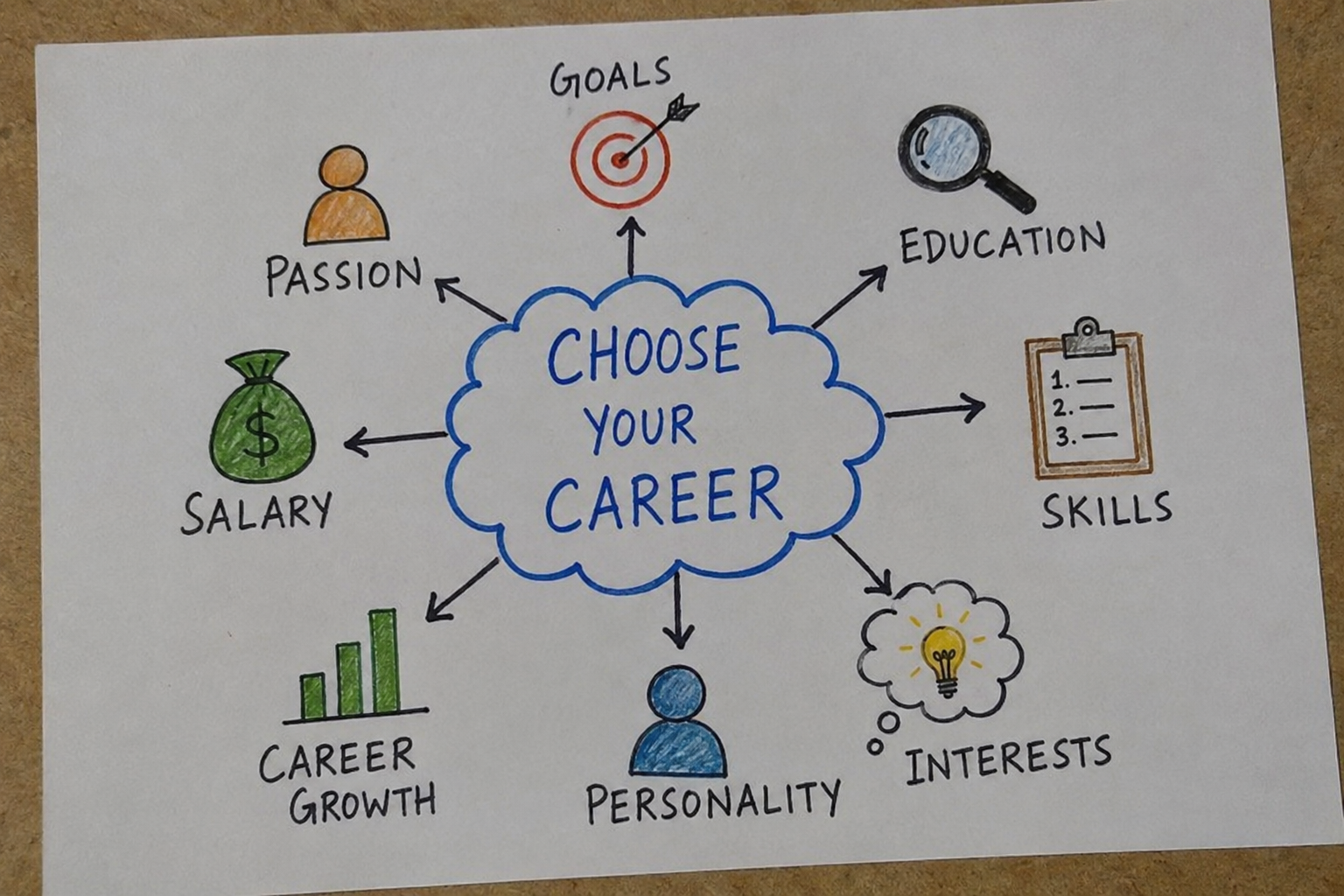
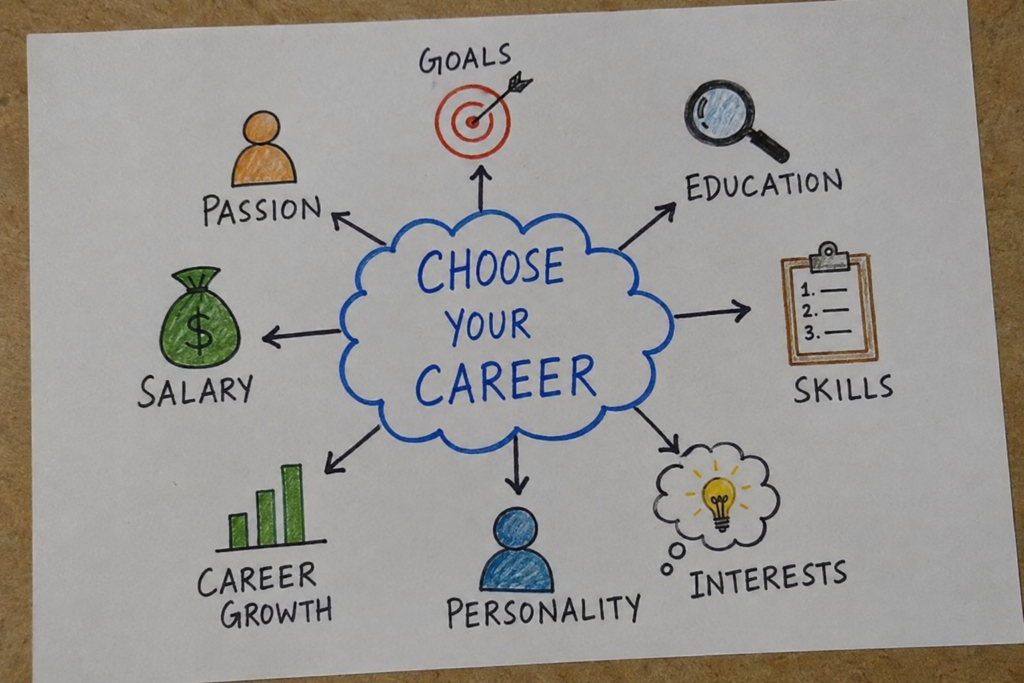
Choosing the right career path is an important process that requires self understanding, research, and careful planning. You should consider your interests, skills, personality, education, financial goals, and future opportunities before making a decision.
Do not choose a career simply because it is popular or because someone else expects you to choose it. Explore different options, speak with experienced people, gain practical experience, and set clear goals.
Most importantly, remember that there is no single perfect career for everyone. The right career path is one that fits your abilities, interests, values, and long term goals. With patience and proper planning, you can make a confident career decision and build a future that is both successful and satisfying.