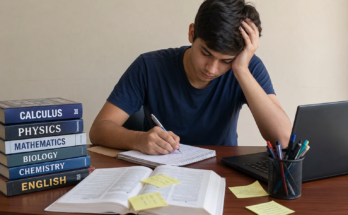
Exams are an important part of student life, but exam preparation does not always have to be stressful. Many students feel nervous when exams are near because they have a lot of subjects to study, limited time, and pressure to get good marks. The good news is that with proper planning, healthy habits, and a positive mindset, you can prepare for exams without stress.
Learning how to prepare for exams without stress can help you study more effectively and feel more confident. Instead of studying for long hours without a clear plan, you can use your time wisely and focus on the topics that matter most. This approach can improve your academic performance while also protecting your mental and physical energy.
Start Your Exam Preparation Early
One of the best ways to reduce exam stress is to start preparing early. Waiting until the last few days can make your workload feel impossible. When you begin your exam preparation several weeks before the exams, you have enough time to understand difficult topics and review important information.
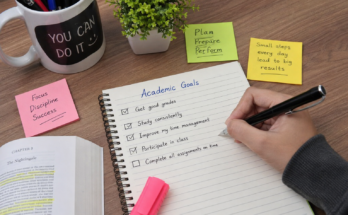
Make a list of all the subjects you need to study. Then divide each subject into smaller topics. This makes your study goals easier to manage. Completing small tasks every day can give you a sense of progress and reduce the fear of having too much work.
Early preparation also gives you time to ask your teachers questions when you do not understand something. You can study difficult chapters again instead of trying to learn everything in one night.
Create a Realistic Study Schedule
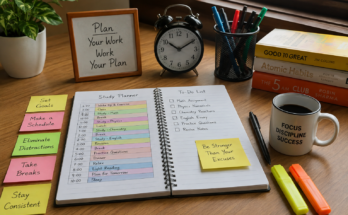
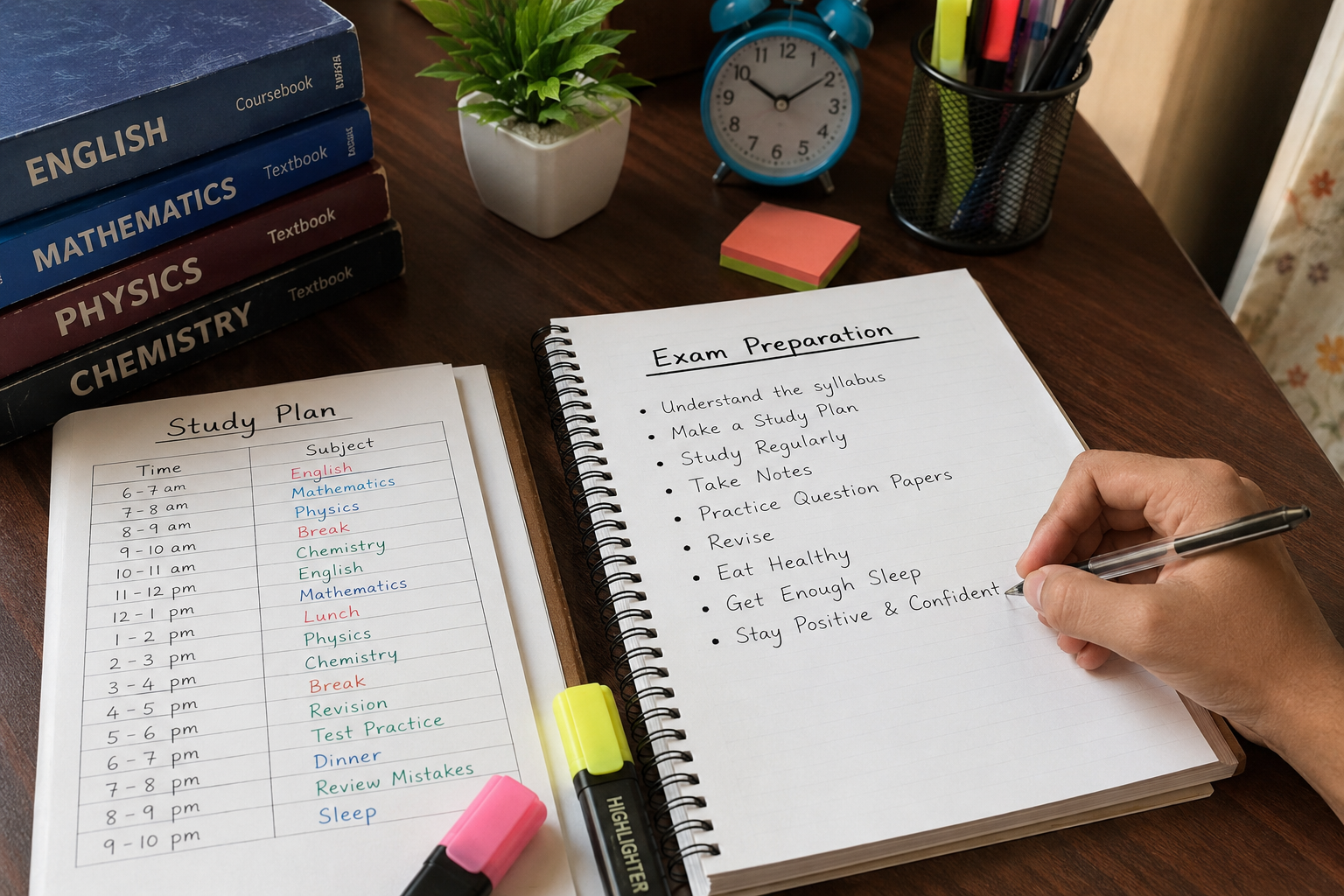
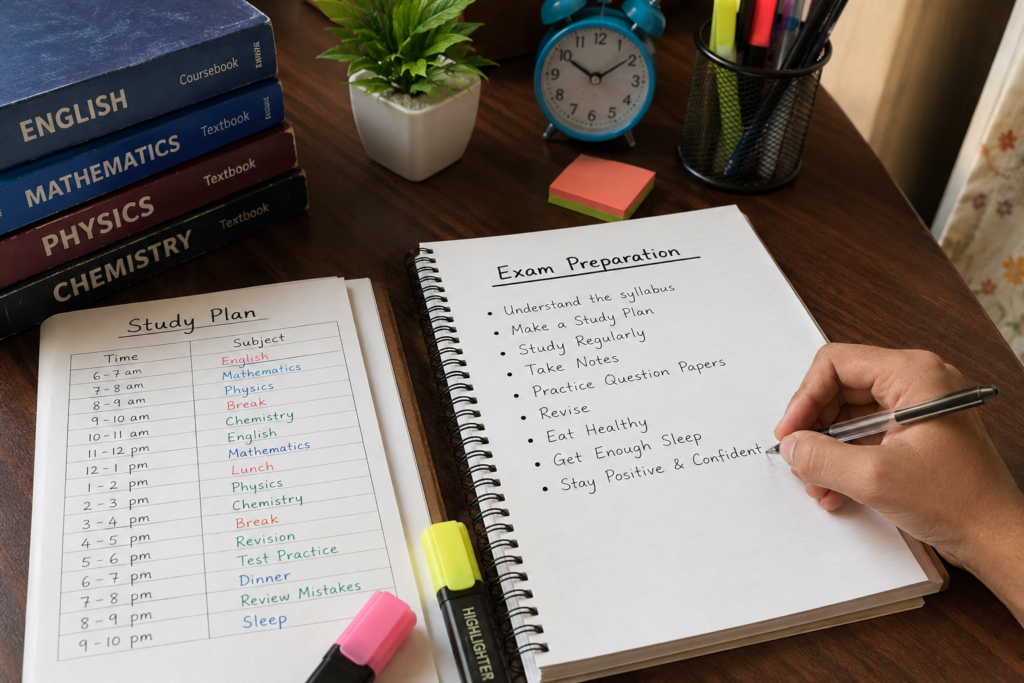
A good study schedule is one of the most useful tools for stress free exam preparation. Your schedule should include specific study times, subjects, breaks, meals, exercise, and sleep.
Do not create a schedule that requires you to study for ten or twelve hours every day if you are not used to it. Such a schedule can quickly become exhausting. Instead, create a realistic plan that you can actually follow.
For example, you might study one subject in the morning, take a break, and then study another subject later. Give extra time to subjects that you find difficult. Keep easier subjects for shorter study sessions.
A realistic study schedule helps you stay organized and prevents last minute panic.
Set Small Study Goals
Large study goals can sometimes feel overwhelming. Instead of saying that you will study an entire book in one day, set smaller goals.
You could decide to complete one chapter, revise twenty important questions, or practice a specific topic. After completing the goal, move on to the next task.
Small goals are easier to achieve and can increase your motivation. Every completed task gives you confidence that you are moving closer to being ready for the exam.
Use Effective Study Techniques
Simply reading your textbook again and again may not always be the best way to learn. Effective study techniques can help you remember information for longer.
Active recall is one useful method. After studying a topic, close your book and try to explain what you remember. You can also write answers to questions without looking at your notes.
Practice testing is another helpful technique. Solve previous exam questions, sample papers, and practice tests. This can help you understand the exam format and identify areas that need more attention.
You can also use short notes, mind maps, flashcards, and simple explanations to make difficult topics easier to remember.
Take Regular Breaks
Studying continuously for several hours can make you tired and reduce your concentration. Regular breaks can help your brain recover and keep your attention focused.
After a period of focused study, take a short break. Walk around, drink water, stretch your body, or simply relax for a few minutes. Try not to spend the entire break scrolling through social media because it can make it harder to return to studying.
Short and planned breaks are an important part of effective exam preparation.
Avoid Comparing Yourself With Other Students
Every student has a different learning speed and study method. Comparing yourself with classmates can increase unnecessary stress.
Someone may say that they have completed five chapters while you have completed three. This does not automatically mean that you are behind. What matters is how well you understand the material.
Focus on your own progress. Set personal goals and try to improve each day. Confidence grows when you focus on what you can control instead of worrying about what other students are doing.
Get Enough Sleep
Sleep is often ignored during exam preparation, but it plays an important role in learning and memory. Staying awake all night may seem like a good way to study more, but lack of sleep can make it harder to concentrate and remember information.
Try to maintain a regular sleeping routine during your exam preparation. Give your body enough time to rest every night.
A well rested student can usually concentrate better than a tired student who has spent the entire night studying.
Eat Healthy Food and Drink Enough Water
Your brain needs energy to concentrate and learn. During exam preparation, try to eat balanced meals and drink enough water.
Include nutritious foods such as fruits, vegetables, eggs, whole grains, yogurt, and other healthy options in your daily meals. Avoid relying too heavily on sugary snacks and energy drinks.
Staying hydrated can also help you feel more alert during study sessions. Keep a bottle of water nearby while studying.
Exercise to Reduce Exam Stress
Physical activity can be a simple way to relax your mind. You do not need to spend hours exercising. A short walk, stretching session, cycling, or another activity you enjoy can help you take your mind away from studying for a while.
Exercise can also improve your energy and mood. Adding some physical activity to your daily routine can make your study schedule more balanced.
Practice With Previous Exam Papers
Previous exam papers are extremely useful when preparing for exams. They can help you understand the types of questions that may appear and show you which topics require more practice.
Try solving practice papers under exam conditions. Set a reasonable time limit and avoid checking your notes while answering.
After finishing, check your answers and identify your mistakes. Do not become discouraged by wrong answers. Mistakes show you what you need to improve before the actual exam.
Ask for Help When Needed
Do not struggle with a difficult topic alone. If you do not understand something, ask your teacher, classmate, tutor, or another person who can explain it clearly.
Asking for help is not a sign of weakness. It is a smart part of learning. Understanding a difficult topic early can prevent stress later.
You can also discuss your concerns with family members or friends if exam pressure is making you feel overwhelmed. Sometimes talking about your worries can make them feel easier to manage.
Keep Your Study Environment Organized
Your study environment can affect your concentration. Choose a quiet and comfortable place where you can focus on your work.
Keep your books, notes, pens, and other study materials organized. Remove unnecessary distractions from your study area.
If your phone constantly interrupts you, keep it away from your desk or turn off unnecessary notifications while studying. A clean and organized environment can make it easier to start studying and stay focused.
Stay Positive During Exam Preparation
Your mindset can have a major effect on how you experience exams. Instead of telling yourself that you will fail, remind yourself that you are preparing and improving every day.
It is normal to feel some nervousness before an exam. Feeling nervous does not mean that you are not prepared. Take a deep breath and focus on the next task instead of worrying about the entire exam.
Positive thinking does not mean ignoring difficulties. It means believing that you can handle challenges with effort and preparation.
Avoid Last Minute Cramming
Cramming may help you remember some information for a short time, but it can create a lot of stress. Trying to learn everything the night before an exam can leave you tired and confused.
A better approach is regular revision. Review your notes several times during your preparation period. Focus on important concepts, formulas, definitions, and questions that you previously found difficult.
By the time the exam arrives, your final revision should be about refreshing your memory rather than learning everything from the beginning.
Prepare Everything Before Exam Day
Do not wait until exam morning to prepare your materials. The night before the exam, check that you have everything you need.
Prepare your stationery, identification documents, water, and other required items according to your school or examination rules. Check the exam time and location so you know when and where you need to arrive.
Preparing these things in advance can prevent unnecessary stress on the morning of the exam.
Stay Calm During the Exam
Even after good preparation, you may feel nervous when you receive the exam paper. Take a moment to breathe and read the instructions carefully.
Start with questions you understand well if the exam format allows it. This can build confidence and help you manage your time.
If you become stuck on a difficult question, do not panic. Move to another question and return to it later if possible. Stay focused on the exam instead of thinking about your final marks.
Final Thoughts
Learning how to prepare for exams without stress is mainly about planning, consistency, healthy habits, and confidence. Start your preparation early, create a realistic study schedule, set small goals, use effective study techniques, and take regular breaks.
Getting enough sleep, eating healthy food, exercising, and asking for help can also make exam preparation easier. Most importantly, avoid comparing yourself with others and do not depend on last minute cramming.
Exams are important, but they are only one part of your educational journey. With the right preparation and a calm approach, you can enter the exam room feeling more confident and prepared. The goal is not to study every minute of the day. The goal is to study smart, take care of yourself, and give your best effort.